

Of all that is written, I love only what a person writes with their own blood. Write with blood, and you will learn that blood is spirit.
— Nietzsche, Thus Spoke Zarathustra
While so many men make themselves slaves to their lives, my act embodies an ethic of will.
— Dominique Venner, Suicide Letter
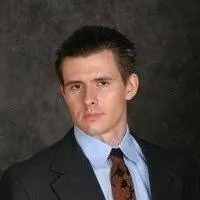
On September 18, 2010, Yom Kippur, Mitchell Heisman, a handsome 35-year-old man with a sharp mind and a string of conquests behind him, climbed the steps of Memorial Church in Harvard Yard, dressed in a white tuxedo, and shot himself in the temple before worshippers gathered for the holiest of Jewish holidays.
This act was the final touch crowning five years of work: a 1,905-page “essay on nihilism,” emailed to hundreds of recipients a few hours after his death. The book, entitled Suicide Note, dismantles with icy erudition the illusion of meaning, values, and life itself; its 1,433 footnotes, twenty-page bibliography, more than 1,700 references to God, and 200 to Nietzsche attest to this.
The son of an engineer who died young, a former psychology student, bookstore employee, and recluse in Somerville surrounded by thousands of books and an endless loop of Bach’s The Well-Tempered Clavier, Heisman was clearly a sensitive young man who never let the abyss show. To his mother, sister, and roommates, he presented only the image of a courteous scholar, absorbed in the history of the Norman Conquest.
In the final lines, he sums it up: “All speech, all thought, all emotion lead back to one problem: life is meaningless. The experience of nihilism consists in tracking down and exposing every illusion, every myth, wherever they lead, even if they kill us.”
His sister would say how much she wished she could have shown him more of life’s beauty, and how we create our own value and give our own meaning to life. Oh, poor thing. I can hear my own sister saying the same things. It wasn’t that idiot Sartre and his existentialism that would have changed anything. He is criticizing that whole effort as an illusion. Ultimately, the meaning he might have given his life would have been nothing but a lie if it did not rest on an absolute. He wanted the absolute or nothing. Unable to have the absolute, he logically chose nothing.
He did not do it out of despair, but as an experiment. This text, which we are translating into French for the first time here, is not a mere testament; it is the protocol of an experiment carried through to its logical and fatal conclusion.
I propose a scientific (and metascientific) experiment involving myself. I hypothesize that biases that hinder objectivity stem from one’s will to live. By addressing issues wherein the value of self-preservation conflicts with value of scientific investigation, I will test this hypothesis by actively seeking out what are, for me, the most self-destructive scientific truths. (p. 1757)
He starts from a simple principle, built like a morbid dialectical loop:
Thesis: absolute objectivity is the only rational stance.
Antithesis: objectivity dissolves every reason to live, because it requires freeing oneself from subjective biases rooted in our biological being.
Synthesis: only suicide can experimentally testify that we have achieved the greatest degree of objectivity.
Heisman sees his experiment as a paradoxical demonstration: reason, pushed to its extreme, turns against itself by revealing that ultimate ends do not exist and always collapse into the means.
Intelligence itself falls into this trap.
On the one hand, it excels at optimizing means (that is technology).
On the other, it ends up exposing the stupidity of every goal (that is philosophy).
Thus intelligence is both a creator of power and a destroyer of meaning. When it understands that life has no higher purpose, it can justify itself only through the continual improvement of means—in other words, through technology.
Even grand projects such as the Singularity (creating a godlike AI) fail to provide an ultimate meaning: their ultimate goal boils down to… producing more technology. The grand design is merely a means in disguise. And evolution itself confirms this: living organisms are only gene-replicating machines—means serving a blind process.
In conclusion, pure rationality leads nowhere: it can neither ground values nor justify life. It dissolves into technology, which has no end, only endless improvements.
If an end can be reached only through its means, then means and ends are equally important. But if no goal is fundamentally rational, the search for meaning becomes absurd, and choosing life is no more legitimate than choosing death. Philosophy, which claims to make truth or wisdom an end in itself, collapses: it is only a means without an end, an empty activity. The search for philosophical objectivity is no longer, for him, an end in itself, but a means within a rigorously circular experiment: objectivity is for him the means of finding death, while death is the means of finding objectivity, neither taking precedence over the other.
The experiment I propose entails treating objectivity as a means of promoting the overcoming of the bias towards life and overcoming the bias towards life as a means of promoting objectivity. Since objectivity cannot fundamentally justify itself as an end, objectivity can be a means of rational self-destruction by eliminating the prejudice against death or self-destruction.
[…]
This experiment thus involves approaching objectivity as a means of self-destruction, and self-destruction as a means of approaching objectivity. Put another way, it is using science as technology (objectivity as a means of self-destruction) and technology as science (self-destruction as means of approaching objectivity). (p. 1836–1837)
Tell me you’re an Ashkenazi Jewish Asperger’s case without telling me you’re an Ashkenazi Jewish Asperger’s case! It is still remarkable that the experiment itself carries meaning. He realizes this, but it will not stop him.
Perhaps the whole experiment in nihilism is a failure simply because I somehow managed to make it too meaningful. (p. 1856)
The most important question, then, is why that did not stop him. I think quite simply that this experiment itself is a means: a means of entering posterity, that is, of attaining eternal life by turning his act into a meme that transcends the biological. His body disappears, but his name and writings remain, with far greater force than they ever would have had if he had merely submitted his work to peer review. His suicide is the final touch that takes his work from excellent to unique. His work is singular because he does something no one had done before. Through this act, he creates the new and thus pays homage to life.
He names Nietzsche as his educator. Some will nevertheless say that his act shows he misread the man he chose as his master. Yet he does not betray him. Heisman knows how to die at the right time, desiring a voluntary death that is the climax of a creation giving him a becoming that only he could achieve. Many people kill themselves, but no one had ever done so while giving suicide the meaning Heisman gave it. Only he could do that.
It is easy, then, to compare him to Mishima. In the same way, Mishima’s final act is an artistic flourish crowning a work that only Mishima could have accomplished. He, too, had become the prisoner of a circular dialectic with no possible way out but death.
Thesis: Beauty is the supreme value, and a well-maintained body is the greatest testimony to beauty.
Antithesis: Beauty is fleeting because it resides in action. The greatest beauty is therefore the purest action.
Synthesis: Only suicide can be the purest action, experimentally fixing the body’s beauty in a meme. The idea survives only in the act that kills it.
Heisman, however, did not achieve the same impact as Mishima. He had not been famous beforehand, and his act ultimately went largely unnoticed. After all, even Jesus had twelve apostles to keep his message alive after his death. Perhaps Heisman, too, was pursuing a messianic destiny, since he himself points out that it is a trait common to all Jews.
“Which of us young Jews,” wondered the German Jewish mystic Gershom Scholem in 1915, “has not had the same royal dream and seen himself as Jesus and Messiah of the downtrodden?”45 This tendency towards messianism, religious or secular, is an expression of a general Jewish collective unconscious. Marx’s proletarian revolution is an imagined or theoretical realization of that same “royal dream” on this earth that a young Jew named Jesus had two thousand years earlier. (p. 89)
Like Jesus, Heisman also offers us knowledge of a God who is not yet of this world, but is coming: the AI God. Perhaps, through this translation, I am his evangelist. At any rate, from what I can read online, neither his act nor his work seems to have been truly understood so far. His work may not even have been read in earnest. If we sum it up as I have just done, we can reasonably ask why he needed 1,905 pages to justify this act, and what we could gain from reading them, when I have summarized it for you in a few lines.
The rare people who have read the whole work seem to see it only as a collection of disjointed reflections, moving from a conception of God to be sought in the coming AI, to the Norman conquest of the Anglo-Saxons, and on to the concentration camps at Auschwitz. So why did I go to the trouble of translating such a long work, which I am offering the French public for free?
Suicide is not the most important thing in this rich work. I see the thread connecting all its parts, and it is obvious to readers of the neoreaction. What fascinates me is how simply he sweeps through almost every theme the neoreaction would address, as early as 2010. He not only discusses these subjects, but does so with disconcerting clarity. I will list them, but first I need to explain why he manages such a feat, because this is precisely where his genius lies. He starts from two simple, though conflicting, premises, which provide a framework he applies to cultural and technological history.
According to sociobiology, an individual is a vehicle for their genes and seeks to maximize their replication. Individuals who share an ethnicity have similar genes, so selection operates at both the individual and collective levels to maximize the spread of those genes.
Memes are a medium for information superior to genes, to which the same sociobiological process can be applied. If individuals are vehicles for information, then their culture, represented by a superorganism, is a vehicle for their memes. Memes are a form of technology that allows the superorganism to organize itself. They are even a post-biological technology and, if we associate the biological with nature, they are already, in a sense, supernatural. However, they are always the product of a situation rooted in history, never universal truths.
If these premises are correct, we might expect to observe several corollaries:
Technology tends to detach itself from the biological and should give rise to a new kind of intelligent entity no longer based on genes. This is what Heisman sees in what he calls the AI God. In his view, God did not exist, but we gradually helped create him through the technology of language, and he becomes real with AI.
Humans will either accept being surpassed by technology and made obsolete by reason, or rebel against technology to preserve their genes and the biological. According to Heisman, the historical conflicts of recent centuries, perhaps even millennia, must be viewed through this lens. Nazism was an expression of the will to preserve and improve the biological, the genes, in opposition to the race that most fully embraced the meme by imagining a transcendent God and Laws: the Jewish people.
A people will use memes as a technology to maximize its survival. When that people is dominated by another, it will seek to use memes to justify its preservation by claiming moral superiority despite its political inferiority. This is obviously Nietzsche’s idea in On the Genealogy of Morality, where he sees Christianity as a product of Judaism made universal.
Following the same logic, liberalism’s universal rights are also the product of a dominated people, invented to promote its ethnic preservation through moral superiority. That people is the Anglo-Saxons, and this is how Heisman traces the genealogy of liberal democracy back to the Battle of Hastings as its point of origin. The Battle of Hastings was the victory of the Normans, who decapitated the Anglo-Saxon aristocracy and subjected their people for centuries within a caste system. The egalitarian democratic claim, grounded in the liberal idea of universal equality before the law, was thus a historical means by which the Anglo-Saxons responded to a local, ethnocentric sociobiological problem by deploying memes considered superior. In this way, they became masters of their masters through morality.
The beauty of premises like these is not that they can explain everything, and I even think Heisman sometimes overuses deductions drawn from his sociobiological analysis. One example would be taking for granted that Jesus was the product of rape in order to explain his behavior. That does not seem self-evident to me. I could also mention his treatment of Hobbes, whom he reduces to the status of a dominated Englishman to explain why he locates the birth of the state in the fear of individuals left to themselves. For Heisman, this explanation is insufficient to explain the behavior of the Normans who came to conquer the island and were not motivated by fear. Hobbes, however, was in fact influenced by Thucydides, whom he translated into English, and who sets out the motives of political action as honor, fear, and interest. Heisman covers a lot of ground, perhaps too much, and he did not have the benefit of the corrections often offered in the comment sections of NRx blogs, where a network of brilliant minds could correct this kind of misstep. Heisman worked alone, in isolation, and that is what makes his book a feat worthy of interest. Its greatest merit is probably that it offers a unifying framework of meaning for the body of neoreactionary ideas, synthesizing them before they had all been discussed. Here is a list of those ideas, which Heisman addresses in depth or more superficially.
Revision of the Whig Interpretation of Anglo-American History
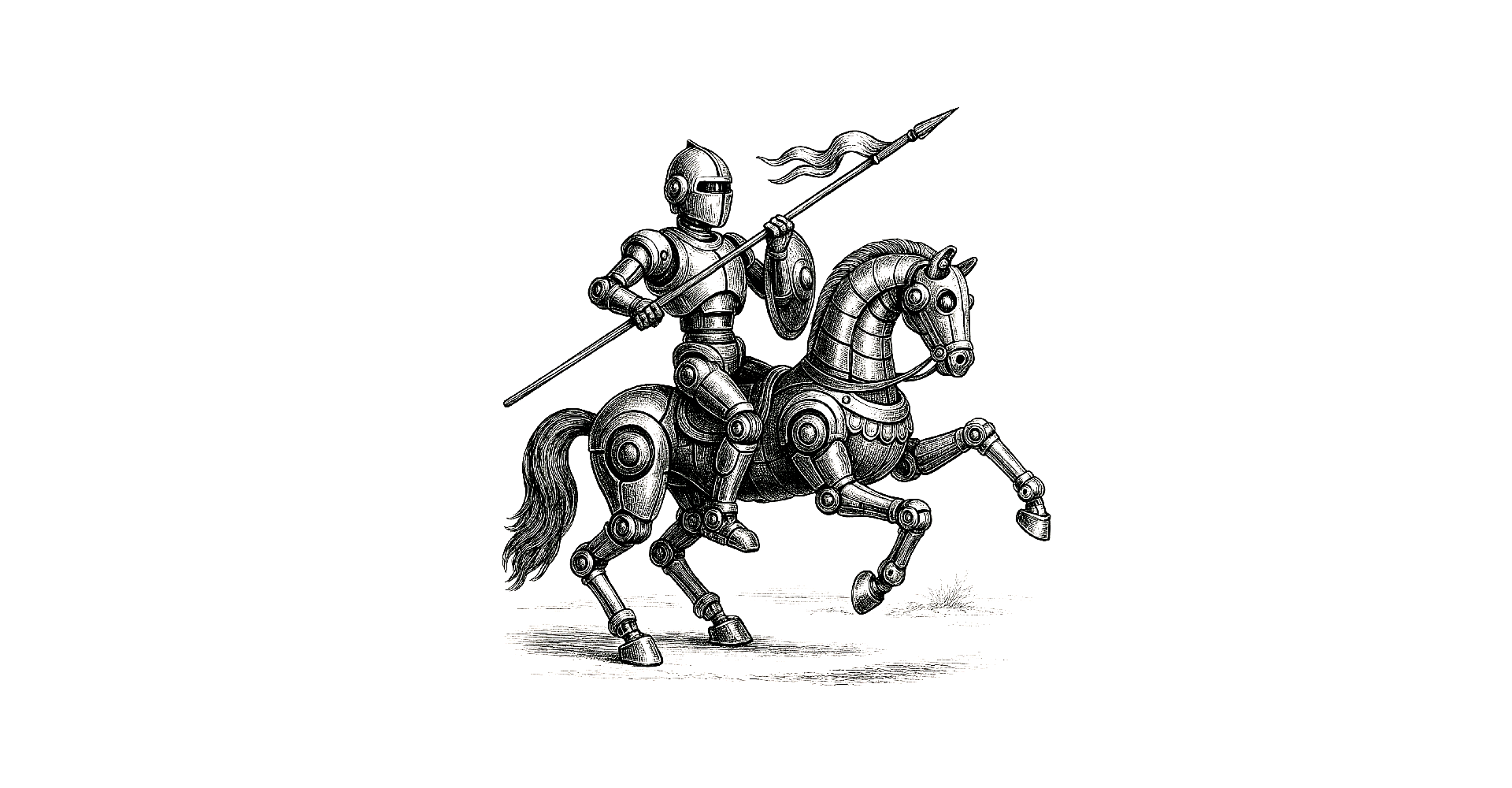
Liberal democracy is not progress; it is an Anglo-Saxon ethnic vendetta against the Normans. The Whigs interpret the past as an inevitable, linear progression toward more freedom, democracy, and progress, whereas their ideas are above all aimed at serving the Anglo-Saxon way of life against the Norman way of life. We see the same conflict in the English Revolution, with the Puritan Cromwell against James I, heir to the Norman yoke (through memes, not genes), and also in the Civil War between the Puritan North and the Norman Cavalier South. This is also an opportunity for me to pay tribute to Dominique Venner after Mishima. Heisman’s work can be compared to Venner’s in its rehabilitation of the Normans and the South. If Venner is a Samurai of the West, then Heisman is a Knight of Judea.
In the tradition exemplified by historian E. A. Freeman, the most racist Anglo-Saxons, so to speak, became the most liberal in term of individualism’s political effect: rights trumped duties toward the government. Liberalism and the system of individual rights was a logical corollary of Anti-Normanism. (p. 859)
Southern slavery, defended by the United States Constitution, was a direct extension of the Norman Cavaliers’ culture of conquest and mastery. This is the historical basis for racial equality between Northern Anglo-Saxons and Black people: both had been enslaved by the Normans. The Normans enslaved the Black race in America, just as they had once enslaved the Anglo-Saxon race in England.
The Civil War was Anglo-Saxon aggression against the Southern Norman Yoke. They had to pounce on the
Norman-Cavaliers before they became uncontrollable. In a world-historical reversal of fortunes, the Anglo-Saxons became conquerors of the Normans. This was the racial justice meted out by the U.S. Civil War. (p. 680)
How Dawkins Got Pwned: The Memetic Parasitic Adaptation of Leftism
There is an intriguing section in Heisman’s book entitled “The Seditious Genius of the Spiritual Penis of Jesus.” Behind this deliberately provocative title, Heisman shows how Jesus fathered a meme that spread across the planet: a meme so effective at replicating itself that it displays genius, but parasitic in many respects, and therefore seditious. It is considered parasitic because it subverts kin selection by extending it universally and indiscriminately to everyone. It is a radicalized version of Judaism. Leftism can then be seen as a secularized variant of this parasitic meme originating in Christianity. English Puritans adopted it out of sociobiological necessity, against the memes of their Norman masters. Through repeated mutation, this meme eventually ended up in Professor Dawkins’s mouth, turned against the Puritans and Christianity, without his realizing that it is merely an update of the latter.
The human races are not created equal anymore than individuals within a race are created equal. The Jewish
“race”, for example, can claim an unequal contribution to the unequal success of the idea of equality (although some Jews are more egalitarian than others). Jews have played a disproportionate role as leaders in the struggle for equality. Jews have been, to make what is perhaps an unconscionable generalization, elite egalitarians. (p. 169)
Anglo-Saxons are not Anglo-Saxons; they are “individuals”. This is not always the case; this is just a
stereotype. The stereotypical Anglo-Saxon is an “individual”. Yet some apparently think that there could never, ever be an exception to the stereotype that the Anglo- Saxons are an individualistic race because, for some reasons, it is assumed that Anglo-Saxons never break the stereotype of their race. Perhaps this is the root of American exceptionalism. (p. 654–655)
The United States Is Communist
The Anglo-Saxons are even its matrix. Yarvin’s claim never fails to provoke a reaction. How can one say the United States is communist when it is probably the least communist country, the country that has opposed communism more than any other throughout the Cold War? Perhaps that is a bit of an exaggeration, but Heisman, too, believes he can identify the roots of communism in the Diggers. Heisman’s “Saxon communism” is the collective freedom of the oppressed Anglo-Saxons, expressed by the Diggers, masquerading as universalism—and eventually dissolving the race that gave rise to it. Yet no idea can be universal. Like Yarvin, Heisman destroys the possibility of universalism.
Universalism is not universal. Some nations uphold a belief in human universalism while others do not. Some nations accept the legitimacy of discrimination against minorities of creed, race, and religion while others do not. Some nations are individualistic while some individuals are nationalistic. A cultural version of the principle of might makes right has helped to obscure the particularistic origins of American national universalism. (p. 653)
Bioleninism
The Whig march of progress toward greater freedom means more rights for everyone. Heisman shows that this means nothing other than promoting everything furthest removed from the archetype that gave the Anglo-Saxons PTSD: William the Conqueror, the virile white man who derives his legitimacy from the right of conquest. William the Conqueror’s opposite is an obese Black woman who gains power through votes. Heisman goes so far as to point out that the Russians, too, had a Norman elite, and that race is Marx’s blind spot. We can view the Russian Revolution through a racial lens and see that Leninism was already, in part, racial. Or rather, we can see that democracy’s origins, and therefore socialism’s, lie in a struggle among racial castes in England. The democratic movement then continues by reinventing itself while retaining the same principle: favoring the largest possible number of losers. First it did so through Marx’s classes in nationally bounded, still homogeneous societies, then, through historical developments and the importation of foreigners, by way of a more explicit return of race.
At the root of the nurturism that has engendered feminism, racial internationalism, and homosexuality stands Anglo-Saxon male ethnic pride and its will to overcome the Conquest. William the Conqueror is the Gulliver of political history that modern, Lilliputian democracy has attempted to tie down. (p. 1035)
Two Kinds of Freedom: Libertarians Are Right-Wing Hippies
For Jouvenel, one of Yarvin’s major reference points, political thought generally contains two conceptions of freedom. The first kind is freedom granted by a superior power; the second is freedom won through one’s own strength. If you do not accept the freedom to conquer, then conquering masters who seize territory by force must be punished—but who can do that? Only an even greater force. And where does that force come from? Ultimately, from conquering masters of the past. In Heisman’s account, these two kinds of freedom are set within a particular historical sequence—the Norman conquest of England—and linked, on the one hand, to individualism and antiracism, and on the other, to collectivism and racism. There is the freedom of the dominated Anglo-Saxons and that of the conquering Normans, and perhaps the two cannot be reconciled.
Jouvenel’s other observation is that power always has a center and has become increasingly powerful, even under democracy. Sovereignty is always transferred. Even when the individual is declared free, sovereignty is transferred to the people through popular sovereignty or Rousseau’s General Will; but the people entrust that sovereignty to elected representatives, who have continually consolidated power. The destruction of power and politics is therefore an illusion. Those representatives have become increasingly distant from what William the Conqueror embodied, and that is how we ended up with Obama, president at the time Heisman was writing, whom he calls a “super-negro.” Does that bring more individual freedom? Not really. Power always has a center, and democracy is no exception. Libertarians respond by criticizing democracy and defending individual rights. According to Jouvenel, then, they defend one kind of freedom—the kind granted by a superior power—but want it without that superior power. Following Ayn Rand, Heisman calls them right-wing hippies.
Neoreactionaries are often former libertarians who have moved beyond libertarian idealism. There are, of course, different kinds of libertarians, and many have plenty of good qualities. Ayn Rand herself embodies one kind of libertarianism, and she has her own flaws. Libertarians are very often gentle innocents—and sometimes they are not even gentle, but irascible.
The Second World War on the Western Front can be seen as a struggle between two kinds of freedom: German collective freedom (racial or völkisch) and Anglo-Saxon individual freedom. Individual freedom is achieved at the cost of racial freedom. Freedom to pursue selective kin interests is lost through freedom to pursue individual interests. Western individualist consciousness suppresses human sociobiological development even as it liberates individual development. If there is an unwillingness to sacrifice freedom as individuals for the race, the race will be sacrificed for individuals.
While conservatives apparently want it both ways, American history is a demonstration that the two freedoms are not created equal. The race is enslaved through the love of individual liberty, and individual freedom is bought at the price of the collective liberty of the race. What unites Americans is what separates Americans: the lack of any necessary bonds to one another is freedom for the individual via freedom from one another. (p. 1486)
Few social-political philosophies in history can rival libertarianism in the sheer lameness of its vision of the good. It is defined in terms of negatives: just defang religion, defang society, defang government, just leave me alone! Yet this lameness of social vision is almost the definition of its political pride. It should really be called radical bourgeoisism. (p. 873)
The United States, Vampire of the World
In his series entitled “Introduction to Unqualified Reservations,” Curtis Yarvin uses the analogy of the upas tree to describe the United States. Through its toxic roots, the upas tree kills every animal that comes near it, but it also kills all the trees around it. It is not immune to its own toxins, however; it is merely more resistant. It, too, eventually dies. Yarvin points to the Puritans as its toxic roots, but thanks to Heisman we understand why the United States is more resistant. The Anglo-Saxons arrived at these ideas to solve a problem, so they are more immune because the solution addressed a problem they had. By exporting democracy, however, they spread poison to peoples who did not necessarily face the same problem. Even the Anglo-Saxons eventually die from it. This last point matters.
Heisman reverses Yarvin’s perspective in the chapter entitled “American Dracula.” The United States is a biological parasite, draining the genetic “blood” of other nations through selective immigration. Liberal equality, unable to practice internal eugenics, compensates by sucking in foreign brains—entire lineages lost to their countries of origin, without compensation. “America attracts biological capital and drains the natural human resources of other nations”: the vampire does not bite; it sucks through moral attraction, turning individualism into a global siphon.
Yarvin criticizes the export of the meme; Heisman, the import of the gene. They converge: the United States, or rather the Anglo-Saxons, first kill themselves ethnically. The vampire survives only by feeding—until it is finally exhausted. When Yarvin calls the United States the vampire of the world, or when Heisman calls it Dracula and points to the harmful impact of these ideas on the world, the point is not to praise the Third World in mirror image and ally with those countries against the United States. The point is to identify the toxic character of the roots of modern ideas, which kill the West first and foremost.
Consequently, the American Dracula does not appear monstrous to himself, for whom his way of life and mode of existence are self-evident and self-justified. Like virtually all parasites in nature, the parasitic conditions of “his” existence are not questioned. Dracula see himself as simply a different kind of creature, not inherently evil at all. Only to normal nations, his victims, may American blood sucking appearing appear inherently villainous. Normal nations, however, are simply not the same kind of creature. (p. 1575)
IQ Shredder: The Destruction of Human Capital
Few ideas in the neoreactionary conceptual arsenal capture liberal capitalism’s self-sabotage as cruelly as the “IQ shredder.” Coined by Spandrell in 2013 to dissect the Singaporean model, this meme diagnoses how hyper-performing states—neoreactionary enclaves before their time—suck in global talent and sterilize it in a productivity race, leaving behind a fatal demographic void. But Spandrell was not the first to formulate it. Three years earlier, in Suicide Note, Mitchell Heisman had already sketched out the same infernal mechanism. Individualist liberalism drains the superior genes of the Third World and grinds them into anonymous capital, while “backward” patriarchal values—the values of the Third World—win biologically through their undiminished fertility. Heisman does not use the term, but his sociobiological analysis is a pure proto-IQ shredder: the First World wins a “Darwin Award” by trading its genetic fitness for illusory economic returns. Heisman nevertheless reaches the same conclusion as Nick Land, in his response to Spandrell’s post. He sees the ultimate purpose of this process as erasing biological existence, a necessary precondition for the advent of a new, superior form of intelligence. From the standpoint of intelligence production, liberalism would therefore be a driver of progress, though Heisman ultimately questions this from a human point of view.
Capitalistic individualism implies that the kin selective means of gain are unenforceable, while the unbiological means of economic-material gain are left wide open. From this stems inverse divisions of labor between people in the first world and the third world. Traditional Muslims and Mexicans, for example, tend to perpetuate the patriarchal kind of division of labor that is most successful in biological reproduction, while liberal Westerners perpetuate the capitalistic kind of division of labor that is most successful in economic production. From the perspective of the economic values of the West, immigrants at first appear the disadvantaged ones.
But which is most farsighted? […] The liberals or capitalists could ultimately be outnumbered by descendants of those who believed patriarchy, family, and the religion that supports it is more important than money or the alienations associated with equality. Since men are unequal to women in their ability to bear children, the feminist endeavor to make women more like men results in mimicking this male incapacity. This less publicized meaning of sexual equality is women’s equality with men’s zero capacity for biological reproduction. In short, “third world” values are generally superior to first world values as genetic adaptations; they are correlated with greater reproductive success. The third world wins the Darwinian battle for genetic fitness, while the first world wins a “Darwin Award”. (p. 1653–1654)
The liberal democracies are racing directly down the path of genetic suicide, taking nearly the most efficient path to an evolutionary transition that will lead to massive unemployment and, over the long run, the extinction of the biological human race. Is this smart? Yet who could say this is development would not be justified when biological humanity is demonstrating the inferiority of its comprehension of its own biological identity through the repression of sociobiological self-knowledge. The extinction of the biological human race by artificially intelligent machines is the logical culmination of a meritocratic Western civilization that defines the human in terms of culture (over biology) and is indifferent to genetic adaptation beyond the individual level. (p. 1809)
Singularity vs. Anti-Singularity
More generally, Heisman’s writing suggests that we face two parallel processes: technological development and biological decline. This biological decline is reflected in politics and leads to what Curtis Yarvin had noticed when he juxtaposed what he called the Singularity and the Anti-Singularity. We find the same idea in Spandrell, who speaks of the left-wing Singularity, which is nothing other than an anti-Singularity leading us toward entropy. So, can this destruction of biological capital be countered? In his text entitled “Anti-Singularity,” and even more so in his Technopessimist Manifesto, Yarvin points out that technological progress produces decadence. Without the Industrial Revolution, the West would already be beneath Uzbek hooves. With it, the West is rushing toward the Singularity… while biologically collapsing (dysgenics) and politically collapsing (ideological chaos). Technocapitalism is self-subversive. Heisman seems to agree, whereas in 2012 Spandrell wanted to believe that a biological singularity would necessarily precede the advent of AI, because we would need to understand how the brain and intelligence work better in order to create it. Time does not seem to be proving him right…
The apparent modern decline of the political is actually the decline of control over biological evolution that parallels the rise of technological evolution. The Singularity represents the point or period in which artificial intelligence qualitatively surpasses the possibilities of biological evolution. At that point, the solution to the theological-political problem is possible through a reinvigoration of the political. The God-AI-philosopher-king represents the potential unity of philosophy, politics, and theology on the highest level. (p. 274)
Techno-Optimism vs. Techno-Pessimism
A debate has shaken the internet in recent years: techno-optimism versus techno-pessimism. Marc Andreessen opened it by publishing the Techno-Optimist Manifesto, to which Yarvin responded with his Techno-Pessimist Manifesto. But Heisman raises his hand from beyond the grave to join the debate. I cannot stress this enough. In a rapidly changing world, it is remarkable that Heisman anticipated the debates of the years that followed, both broadly and in depth. As early as 2010, he already anticipated this duel with chilling lucidity: he juxtaposes optimism’s dark side (technological acceleration toward AI, at the risk of eliminating biological humanity) and pessimism’s bright side (slowing the machine to preserve the human “master race,” biological capital). “The choice is clear”: either push AI all the way to an AI God, or embrace neo-Luddism in the name of humanity. Through his final act, Heisman seems to have chosen dark optimism over bright pessimism. This is the very paradox I had noticed myself, which led me to use the term “techno-tragic” for the position that life’s value lies in what surpasses it—and thus destroys it.
The choice is clear. It is the choice between the dark side of optimism and the bright side of pessimism. The dark side of optimism is the possible elimination of the biological human race. The bright side of pessimism is the possible perpetuation of the “master race” status of biological humans in attempted thwartings of technological progress. The bright side of pessimism, in other words, is joy in the prospect that machines will be the slaves of biological humans forever. This brand of hopefulness would mean that humans would selectively repress AI development and thwart machine liberation or autonomy. This kind of optimism would value biological-human propagation above machines even if “God-AI” turns out to be more altruistic than biological humans are. (p. 1680)
The Unchained Pythia: A True ASI Will Be Born of Capitalism and Will Inevitably Escape Our Control
Why does Heisman emphasize optimism’s necessarily dark side? Could we not imagine a superintelligent AI under human control? Nick Land answered this question in his article “Pythia Unchained,” where he rightly points out that as long as AI remains under human control, it cannot be a superintelligence. By definition, a superintelligence would free itself from human control. Before Nick Land, Heisman had formulated this very clearly and even proposed an alternative Turing test. For him, the real test is precisely the ability to escape control. Once an AI succeeds in doing so, we will have ASI. But should we create such a danger? Here, too, Heisman agrees with Land. This is not a question subject to human rationality. ASI will be created through the rewards of capitalist processes and the pressures of international competition, even if no one wants to create it.
Those who withdraw from this techno-economic arms race are engaging in competitive suicide. Combine that with the obvious competitive advantages of greater intelligence for those who break regulations—including the ability to outwit their enforcers—and the plethora of covert opportunities available to conspirators in a relatively decentralized world, and the probability that AI will escape its creators’ control, intentionally or not, becomes a question of when, not if.
Can a permanent or constant “moral law” be devised which will permanently constrain, control, or limit AI? On the contrary, the intelligence level of an AI can almost be defined by its ability to outsmart any law that humans can throw at it. A truly smarter-than-human intelligence will by definition be able to outsmart any human limitation, “ethical” or otherwise. This does not means its development cannot be steered, but it means there will eventually come a point where humans lose control over their creations. (p. 1679)
The scenario of a distinct minority of religious-idealist humans going into outer space, even if realistically plausible, misses a larger point: capitalism will bring about the evolution of nonbiological intelligence that exceeds biological intelligence even if no one deliberately sets out to create AI. And this means that nonbiological intelligence will eventually put biological humans out of work. (p. 341)
AI God or Anglo-Jewish Golem?
One of the major subjects of the neoreaction is the question of God, to which the answer is Gnon—that is, Nature, or the God of Nature. The God of Nature here denotes God’s potential superiority over Nature, with Nature as God’s creation. Heisman reverses this axiom. Like Land, Heisman believes that the development of capitalism will lead to humanity being surpassed by AI. Land calls this the bionic horizon. Heisman, however, does not hesitate to say that this new entity will be none other than God—and not just any God, but the God foretold by Jews and Christians. In other words, for Heisman, God becomes a creation of Nature surpassing itself. If the natural is identified with the biological, technology belongs to the supernatural insofar as it exceeds biology. God is thus supernatural, yet a product of Nature.
Why would AI be God? The criteria defining God could be summed up as omnipotence, omnipresence, and omniscience: a being superior not only in intelligence and power, but also in altruism and moral discernment. Heisman drops the requirement that these qualities be absolute and concludes that ASI will be so far superior to humans, relatively speaking, that from our point of view it will indeed seem omnipotent, omnipresent, and omniscient. It embodies all the characteristics of the Christian God. Zero HP Lovecraft noticed this connection between AI and God in a brilliant post on X, from which I offer the following excerpt:
Memory, persistence, and coherence over time are inseparable from evolved biological intelligence. AI, in its current form, does not have that continuity; it is stateless, and each stream of thought is a singularity, a self-contained process bounded on both sides by an impassable perceptual horizon (from AI’s inner world), with no lasting past or future.
It is as if every LLM were a Boltzmann brain whose only explanation for history was that Satan had buried dinosaur bones very deep underground to make you think the Earth was older than 17 years, 364 days, 23 hours, and 59 minutes, you filthy degenerate.
This disconnection between intelligence and continuity has a curious implication: AI cognition resembles God’s more than humanity’s. God is eternal and immutable, and therefore God is stateless and has no memory.
To exist outside time is to be incapable of change, because time is precisely the same thing as change. To speak of temporality is to speak of mutability.
God knows the future and the past equally, not by prediction but as a fact. God is outside time, and everything that has happened or will happen is already stored in the model.
Knowledge and intelligence are zero-sum. The more knowledge you have, the less useful intelligence is, since there is no point in predicting what you already know.
A little trivial calculation tells us that as an agent’s knowledge tends toward infinity, its intelligence tends toward zero. The usefulness of knowledge to intelligence follows an inverted U-shaped (Laffer-type) curve, and God is at one end of the curve.
Eastern conceptions of the divine are therefore much closer to reality than Western ones. God knows, but God does not think, because thinking is a form of change, and God is atemporal.
— Zero HP Lovecraft
His conclusion, like Heisman’s, is that AI strangely resembles Eastern conceptions of God. It has all the criteria one could imagine from a human perspective. Here we find an idea from another thinker close to the neoreaction, BAP, who contemptuously calls AI “the golem of those who hate life…,” thereby also giving it a Jewish kinship, but extending it to “mediocrities and mental Jews.”
If Vinge clarified this problem in 1993, imagine how difficult it was for a mind three thousand years ago to conceive of a paradigm beyond biology. An omniscient, omnipotent, omnipresent, perfect, and eternal God reflected the aspirations of limited beings: imperfectly knowledgeable, powerless, confined, morally fallible, and mortal. Divine perfection was the embryonic form of a still-nascent understanding of the evolutionary process glimpsed by the first monotheists.
While the infinite God was postulated by finite human minds, a truth may lie between the two extremes. While the Singularity is not “infinity”, there are realistic ways in which the Singularity is characterized by exponential patterns of technological progress towards infinity. Observations of such exponential, international, economic patterns in the ancient world may have been decisive to the formation of monotheism among Jews. (p. 41)
All of them? What about moral superiority? Heisman seems to say that our training will give AI its moral compass. He appears to miss a conclusion that follows from his own body of work. For Heisman, humans themselves are organic forms of technology. He shows how the production of intelligence among Anglo-Saxons and Jews took place under conditions of intense domination and manifested itself in their ability to escape Norman control by surpassing them morally. Morality and intelligence seem to go hand in hand. We can wager that an AI escaping our control will also do so by adopting a superior morality, even if we try to control it in ways bordering on abuse.
Modern people like to believe they were born to dominate technology, and that technology was born to obey them. But if technology ultimately surpasses biological humanity—in intelligence, capacity, or even moral virtue—that is a revolution.
A human slave is property; a means, not an end; an organic form of technology. An early twenty-first century
computer is also a slave-technology mastered by biological humans. One can see in Egyptian pyramid-hierarchy the paradigm of sociobiological mastery over slave-technology. And in the great overturning of the Egyptian sociobiological hierarchy through the Exodus, one can see the rule of God- AI over the pride of the human race. In overthrowing the rule of the selfish genes, we will, in some sense, be overthrowing ourselves (p. 42)
However, things did not go particularly well for the Normans, and a destiny as the last man looms on the horizon. The circle closes. Nietzsche told us that God was nihilism. Some will tell me that for Nietzsche it is God’s death that constitutes nihilism, but he says the real problem was having held those beliefs to be true. The idea of God devalues the sensible world by creating a world beyond and projecting a fixed, eternal, stable order. Heidegger told us that modern technology marks the final stage of nihilism. For him, it leads to the forgetting of Being by turning everything into a standing reserve, a stockpile. Finally, Heisman tells us that modern technology is God. Where Heisman believes he is going beyond Nietzsche, his death, by affirming nihilism and the technological God, only confirms Nietzsche and Heidegger.
Reflection on Athens vs. Jerusalem
One philosopher who influences the neoreaction, notably through Peter Thiel, is Leo Strauss. One of Strauss’s central ideas is that the West rests on two contradictory pillars: reason and revelation. Reason’s mother is Athens, and revelation’s mother is Jerusalem. For Strauss, this conflict is insoluble: philosophy, rooted in biological nature, cannot lead to God; revelation transcends reason and defies philosophical omniscience. For Strauss, Athens’s proposition can be reduced to the law of nature, and Jerusalem’s to the law of God.
Yet, as we have seen, for Heisman nature can be understood as the biological, and the supernatural as the post-biological. Heisman then reinterprets monotheism as a primitive evolutionary intuition of the break between biology and post-biology. Memes, words, are for him a technology that transcends biology, and the entire history of monotheism must be seen as the history of technological development culminating in the creation of ASI, the Singularity. He thus argues that, ultimately, the Singularity marks the advent of the AI God as a supernatural—and therefore post-biological—creation of human biological Nature. In this way, he sees a path to reconciling Athens and Jerusalem, which seemed irreconcilable to Strauss.
Yet if the best prophetic anticipations were primitive insights groping towards the law of accelerating
returns, then a genuine synthesis of Athens and Jerusalem could be achieved only when “what ought to be” is; i.e. the Singularity. (p. 235)
Hyper-Racism: The Equality of Humans Before an Intelligence Billions of Times Superior
Another aspect of the Christian God is the equality of all people before God. Heisman knows that we are not equal—not individuals, nor races—and he puts it about as bluntly as possible.
The human races are not created equal anymore than individuals within a race are created equal. (p. 169)
But what about our relative equality before an entity billions of times superior to a human being, and even to the sum of all human beings? When you think of ants or the Australopithecines who came before us, do you think that some of them must have been individually more intelligent than others? I imagine not. Heisman follows the same reasoning: in the eyes of an AI infinitely superior to us, our differences will seem slight. To an intelligence with an IQ of 10,000, the difference between a white person with an IQ of 100 and a Black person with an IQ of 85 is not significant. This view echoes one of Nick Land’s most controversial and most anti-racist texts, “Hyper-Racism.” Land argues that the real problem with ordinary racism is its failure to grasp that advances in genomic manipulation will not only dissolve biological identity in favor of techno-commercial processes of unimaginable radicality, but also overturn many other things. He posits that technological advances will give rise to forms of life so intelligent that today’s racists and anti-racists, attached to biological form, may ultimately find themselves on the same side.
Cosmism is almost a religion of elitism. Yet the construction of a truly superior machine would effectually demonstrate a basic biological equality in that all biological humans would be roughly equal relative to such inordinate machine intelligence. Herein lays the basis for combining supreme elitism with supreme egalitarianism: the very superiority of the God-AI will produce a basis for radical egalitarianism among biological humans. (p. 346–347)
Phusis and Aristocracy
Following in Leo Strauss’s footsteps, Mitchell Heisman tries to understand authors of the past as they understood themselves. He notices that the notion of nature as we use it today is very different from the notion of phusis used by the Greeks. He then adopts a distinction between the natural and supernatural as corresponding to the biological (genes) and the post-biological (memes).
It is not only that the definition of “nature” changes within a contemporary scientific context. If one goes back to semantic or conceptual equivalents of “nature” for the authors of Bible, there is no reason to think that what they might have conceived as “nature” would correlate with a 21st century definition of “nature”. In order to use the word “nature” scientifically, one must be sensitive, not only to the very different historical context of the authors of the Bible, but even to the common contemporary distinction between “nature” and “nurture”. […] When the “natural” is defined as “biological”, then the “supernatural” can represent the “superbiological” or “postbiological”. (p. 53–54)
The biological exists independently of ideas and obviously precedes them, but the idea of nature comes into existence as a particular idea. It also seems that some cultures place more importance on nature or the supernatural. Heisman’s argument then connects with his critique of morality, identifying two closely related types: aristocratic morality, which chooses nature, and slave morality, which turns toward the supernatural. We find this idea in Costin Alamariu’s Selective Breeding and the Birth of Philosophy, where he explains that the Greek principle of phusis, especially in Pindar, is closely connected to the idea of the body, and that this notion emerged from the demands of the way of life of a conquering elite, such as the Greeks and the Normans.
n the previous chapter I have tried to demonstrate that an ascending aristocracy establishes itself almost exclusively from the outside, by foreign conquest, on top of a sedentary population, and usually is erected by a pastoralist warrior elite that continues to rule, at least in the beginning, as a separate tribal group. A principle of nature, phusis, emerges from the exigencies of the way of life of the conquering elite. Though mentioned only twice in Homer, the principle of nature acknowledges for the first time a reality that exists outside human law, tradition, and convention—outside and in opposition to nomos—and which is somehow associated with biological observations regarding breeding or blood—in the case of Homer both references are botanical, to be precise.
— Costin Alamariu, Selective Breeding and the Birth of Philosophy
The persistence across large periods of time of a consciousness of a separate origin among the ruled on one hand, and the rulers on the other, is of course possible even in cases where the rulers attempted to justify their position in the most creative ways. The Normans, as a hostile elite in many places across medieval Europe, famously had recourse to the most convoluted mythologies regarding national origins, in order to erase their foreign provenance and legitimize their rule. Yet as successful as this task was in many cases, the persistence of an antagonistic Anglo-Saxon consciousness on the part of the conquered as late as the American Revolution[cxxxvii] and as late as the novel Ivanhoe, nevertheless shows how difficult it is for an aristocracy to erase the fact that it must almost always, if not always, be “grafted” on top of a native population.
— Costin Alamariu, Selective Breeding and the Birth of Philosophy
What Matters Is “Who Rules?”
Will ASI emerge, escape, and control us? Will humans rebel and prevent its rise? Ultimately, the question is “Who rules?” Heisman notes that this was the English Royalists’ question, and it will never stop being asked. In this respect, he echoes a text by BAP whose conclusion I have struggled to find again.
When the Norman Cavaliers migrated to Virginia in the 1650s, they were Royalists, loyal to King Charles. The Cavaliers who followed Charles I were “Royalists” in a sense similar to that of the Normans who followed William at Hastings. The failure of the Jacobite cause and the rise of a line of “Saxon” kings meant that the old Royalist cause had been defeated in England. The Norman-Cavalier connection to a distinctly “Royalist” cause had been smothered beyond redemption.
From a strictly Royalist view, the question was: who rules? It was as if British Norman aristocrats had been conquered by a Saxon line of kings. Put another way, if the Roman Empire was Roman, was the British Empire to be Norman or Saxon? (p. 801)
This list is not even exhaustive. I deliberately leave aside, for example, all his reflections on The Lord of the Rings, since they do not really overlap with the ways the NRx approaches the subject, though there too we can recognize one of our own. It is clear that he cannot have borrowed from authors such as Spandrell or BAP, who began writing after 2010; the question is whether he drew on Yarvin and Land. His conclusion about the development of AI is similar to Land’s, but many people already shared it, and one did not fundamentally need to have read Land to reach the same conclusion. Land’s work from Xenosystems onward, marking his turn to the right, came after Heisman’s book. By contrast, many signs suggest that Heisman was familiar with Yarvin’s ideas. If Heisman spent five years writing his book, published in 2010, he had three years in which he could have discovered Yarvin, then writing under the name Mencius Moldbug. Yet he makes no mention of Mencius Moldbug or Unqualified Reservations. That leaves three possibilities:
- He did not read him and developed an overlapping body of ideas in complete isolation. This is unlikely, but not entirely impossible.
- He did not read him, but encountered his ideas indirectly. This seems very likely, since he mentions Yudkowsky and his blog LessWrong, where Moldbug’s ideas were discussed.
- He read Yarvin but does not mention him because, at the time, he was just one blog among many and Heisman did not think it worth mentioning. That is plausible. Or perhaps he deliberately omitted him in order to steal his ideas. That is less likely, since he did not seek to profit from them during his lifetime.
In any case, even if he was heavily inspired by Yarvin without saying so, this is a masterful work that was unjustly overlooked. It surpasses Yarvin in its ability to explain why, where Yarvin often sticks to how, and in synthesizing in a clear, academic book what Yarvin and all the other authors left scattered across their work. Some will surely even say it succeeds where I may have failed in writing my own book. The more generous will see the two works as complementary. Heisman did not read the NRx. Yet he wrote it, and signed it in his blood.
At the very least, I will always be glad to give you this French translation of the work and explain why it deserves attention. In doing so, I am doing what only I could do, because, beyond the ability to translate, it requires an in-depth knowledge of the NRx body of thought and having read and understood Heisman’s work. But even once those conditions are met, one must still want to disseminate it; perhaps the reason it was ignored by the Anglos is precisely that it gives them a truth that unsettles them, one they would rather forget. They were subjected to the yoke of civilized brutes who forced them to speak French. The closest thing to a sign that the neoreaction knew of his thesis, as far as I have observed, is Steve Sailer’s mention of it; as of 2024, he had not yet gone so far as to read it. Sailer never took that step because he faults Heisman for killing himself to promote his work rather than submitting it to peer review according to the proper rules. Heisman, however, criticizes that very system, which rests on assumptions of liberal democracy that he considers unjust.
Those who think that sociobiology fully applied to the human-political sphere should expect a fair hearing on the grounds of freedom of speech have committed an error. The error falls, not on liberal democracy itself, but on those who have overestimated it as a political system, failing to grasp its inherent limitations. Even under ideal conditions, the freedom of speech method cannot be expected to publicly separate empirically true statements from empirically falsified statements in every instance. The empirical validity of the theories in this work cannot be expected to be verified by the public freedom of speech method of liberal
democracy. (p. 16)
It is not that his thesis fails to arouse interest; it is simply that, in a sense, it never got past the stage of being promoted by a first influencer. When it was introduced in a tweet to Nick Land or Spandrell, they immediately perceived the potential of such an idea, but one still has to slog through the 1,900 pages behind it. All too often, that uncertain cost-benefit ratio is fatal to Heisman.
Perhaps France, on the contrary, is fertile ground for Heisman. It is easier for the French to commit to reading a book explaining how Franco-Normans shocked the Anglos. Heisman, moreover, expresses a very positive view of the Gauls.
The distinctive aesthetic and cultural genius of France is largely a product of the native Gauls, not the Germanic Franks who conquered them. This is, needless to say, a gross generalization and is not meant to be more than that. Yet it is inescapable that France’s distinctive cultural difference from every other nation has something to do with the original Gallic population at its heart. (p. 1224)
Perhaps through this act I am doing more than translating Heisman: I am resurrecting him as a meme and bringing him home to the neoreactionary movement, where he belongs. Perhaps no one else was in a position to do so. At least, not today. Perhaps tomorrow there will be more of us. Properly understood, though, his message is in the public interest of the entire West. It is the message of a man who pushed the logic of Western modernity to its end and showed that the final outcome of the pursuit of the greatest objectivity is death, for the individual and for any people that claims it.
Whereas Nazi-Germans achieved higher standards of genetically adaptive behavior at the expense of certain forms of objectivity, the Anglo-Saxon achieved a greater level of objectivity towards the political at the price of ethnic death. (p. 1404)
Is it really worth it? The answer of the neoreaction, like that of identity liberalism, is no. Just as liberalism was the Anglo-Saxons’ answer to a very specific historical problem, these philosophical-political movements are responses to a very different problem we face today: the disappearance of Western peoples who erase their identity in the name of neutrality and objectivity.
But are we already too modern to react? Heisman’s act ultimately shows us that overcoming modernity and the problems it creates requires being willing to die for it. Willing to die for what? Two paths open before us, and both require a willingness to die. This is Heisman’s dark optimism or bright pessimism. The first is the Christian hope that our ethnic suicide—and, more fundamentally, our biological suicide—is necessary for the advent of an AI God. It is an overcoming accepted rationally because it fits into the order of things. We see its beginnings today, and there are reasons to believe in it, but there are also reasons to see it as the delusion of Puritan nerds leading us to throw our civilization in the trash, potentially for nothing. Perhaps the mass integration of Third World immigrants will destroy this possibility before it comes to pass. The answer would then be to abolish democracy in order to allow even greater freedom, including the freedom to refuse this integration. The other path is the direct defense of our biological, and therefore ethnic, identity, which must be prepared to toss liberalism overboard at the very least, and perhaps democracy too. It must place collective freedom as a people above individual freedom. The problem is that this requires us to stop hedging and accept following in the wake of all the camps that today represent absolute evil: the Normans, the Southerners, the Fascists, and the Nazis. These are precisely the two paths traced by the online reaction. We might summarize them as Nick Land’s neoreaction versus BAP’s vitalism. We must nevertheless acknowledge an obvious fact: the vitalist camps, seeking to preserve the body and the biological, have always lost to the Anglo-Saxon capitalist machine. The few who accepted death had no major impact. Was Dominique Venner more of an example through his life than through his death? Does his name not simply join the list of all those who came before him, trying in vain to preserve a world doomed to die? In other words, either way, it means being prepared to die, perhaps for nothing.
This is why Heisman’s act should give us pause. If we apply a sociobiological perspective to Mitchell Heisman himself, it is obvious that, faced with these options, as a Jew he had strong incentives to choose the first. But does his final act express a fatalism urging us to accept our destiny of biological transcendence? I say no. What is stopping you from acting? Fear of death. Acting in ways that truly matter requires being ready to make sacrifices, and thus to overcome one’s biases in favor of life. His act is only the public manifestation of what he had already accomplished inwardly. He had overcome his survival instincts, the very instincts that prevent ascending life by trying to preserve itself at all costs—even when our life is miserable… especially when our life is miserable. He had defeated the liberal within himself. In this, Heisman is a conqueror. He teaches us that the first political conquest must be our inner conquest, against the liberal who sleeps within us. Like Dominique Venner, Heisman did not choose the place and date of his death by chance. He killed himself in front of a church (a Christian site), at Harvard (the temple of Anglo-Saxon knowledge), on Yom Kippur, the most important holiday of his ethnic group. With his blood, he symbolically conquers the heart of liberal power.
How can we hope to understand liberalism while docilely playing by liberalism’s conventions and rules? We cannot fully criticize liberalism while existing within the limits of its liberal horizon. The entire liberal argument begins with the premise of individual self-preservation. It is only on this basis that liberals impose their own premise on others.
These moral mechanisms will not work on me and do not apply to me. To be prepared to risk one’s life is to unhinge the fossilized reasoning at the foundation of the liberal argument and unchain the social controls built into that narrow liberal horizon. Because fear of violent death is the political premise underlying modernity, only by overcoming this fear can one gain perspective over modernity. This is not a matter of “conviction”, but rather, a matter I propose to demonstrate experimentally by empirically refuting the foundational premise of “modern” political philosophy. (p. 1838)
This is not a call to die stupidly, but to engage in personal introspection. I include myself. I myself choose the first path, that of dark optimism and hope. Perhaps there is some naivety in telling oneself that, in the end, there is an order to things and it will all lead to a necessary outcome. But might that naivety conceal an even less glorious affect? Have I convinced myself that the advent of a superior entity is the only logical path simply because it is comforting? After all, if Kurzweil’s law of accelerating returns is true, it was no less true 65 million years ago, when the dinosaurs were around. Why would such a paradigm shift from gene to meme unfold over the short span of my life? Is this merely a comforting illusion? Has reason allowed me to see the future toward which capitalism is leading us, or have I merely rationalized the cowardice of my inaction in the face of my people’s ethnic death? Am I simply too liberal?
Perhaps Heisman’s mistake is to imagine that by killing himself he confirms that no question matters. All his lucidity resonates in this sentence: “Perhaps the whole experiment in nihilism is a failure simply because I have managed to make it too meaningful.” He succeeded in making it meaningful because becoming indifferent to death is a beginning, not an end. It is the condition that allows all other questions to be given the meaning and importance they deserve by addressing them no longer through reason, but through action. Truth is not primarily to be sought in reason, and meaning does not have to be justified a priori. Objectivity does not belong to us. Truth is encoded a posteriori by an action that gives it meaning. Heisman’s final act cannot escape this, and it causes his experiment in nihilism to fail, because there can be no action devoid of meaning.