

“Eugenics is the science that deals with all the influences that improve the inborn qualities of a race, as well as those that develop them to the greatest advantage. The improvement of the inborn qualities, or ‘stock,’ of a particular human population is the subject considered here.”
What does improvement mean? What does the syllable eu in eugenics mean? Its English equivalent is good. There is a considerable difference between the goodness of individual qualities and the goodness of character taken as a whole. Character depends largely on the balance between qualities, and that balance can be strongly influenced by education. We should therefore set morality aside as far as possible, to avoid getting bogged down in the almost insuperable difficulties involved in deciding whether a person’s character as a whole is good or bad. Moreover, the goodness or badness of a character is not absolute, but relative to the current form of civilization.
A fable makes the point clearly. Imagine the scene in a zoological garden late at night, assuming that, as in old fables, animals can speak, and that some very wise creature with access to all the cages—say, a sparrow or a philosophical rat—has been appointed to collect the opinions of all kinds of animals in order to devise a system of absolute morality. There is no need to dwell on the conflicting ideals of predators and prey, or of creatures that work hard for their food and sedentary parasites that cling to their hosts to suck their blood, and so on.
There would be many votes in favor of maternal affection, but most species of fish would reject it, while among the birds the cuckoo’s musical protest would be heard. Although no agreement could be reached on an absolute morality, the essential principles of eugenics can be easily defined. All creatures would agree that it is better to be healthy than sick, vigorous than weak, well adapted to one’s role than poorly adapted.
In short, it is better to be a good specimen than a poor one, whatever the type. The same is true of human beings. There are many conflicting ideals for different kinds of character and incompatible civilizations, but all seek to give life fullness and interest. Society would be very dull if every man resembled the highly estimable Marcus Aurelius or Adam Bede.
“The aim of eugenics is to represent each class or sect by its best specimens; and then to allow them to develop their common civilization in their own way.”
Excerpt from Essays in Eugenics, Sir Francis Galton, 1909.
When I was an undergraduate biology student, I was introduced to population genetics and to the ways in which the allele frequencies of different genes could change within a given region. Population genetics is a scientific discipline founded in part by two eugenicists: Sir Ronald Aylmer Fisher and J. B. S. Haldane. Both were mathematicians and biologists, as was the father of eugenics, Sir Francis Galton, who began his studies in medicine before turning to mathematics. Population genetics is the statistical study of genotype distributions. It analyzes how they change in response to the prevailing selection pressures, migration, and interbreeding.
Alleles are different variants of a gene. So, if one variant is better and another worse according to some chosen criterion, then a shift in allele frequencies in either direction, depending on the environment, is necessarily desirable or undesirable. This viral thought infected me as I was typing frantically on my computer in the middle of a lecture hall where a process of selection had already begun. In the first year of my undergraduate degree, there were nearly 1,000 students; by the third year, there were only 200. Just 20 of us went on to pursue a science PhD. One day, a professor of evolutionary biology asked us whether it would be better to select the top quintile of the class or eliminate the bottom quintile. The second answer was certainly more widely accepted, but my intuition pushed me toward the first.
From Darwin to Plomin
In 1871, Charles Darwin published The Descent of Man, and Selection in Relation to Sex, applying his theory of evolution to the evolutionary history of humankind and citing his cousin Francis Galton. These two biologists were already theorizing that if selection pressures had shaped our species, particularly with regard to intelligence, then the industrialization that had emerged as a result would very likely allow the most stupid to survive and reproduce.
“Natural Selection as affecting Civilised Nations.—I have hitherto only alluded to the changes of condition to which man is subjected; but the same conclusions hold good with even greater force with reference to the changes of bodily form. Man has become what he is through natural selection; and, if he continue to progress, he must remain subject to the same law. In regard to the bodily structure, we know that the weak in body or mind are soon eliminated; and those that survive commonly exhibit a vigorous state of health. We civilised men, on the other hand, do our utmost to check the process of elimination: we build asylums for the imbecile, the maimed, and the sick; we institute poor-laws; and our medical men exert their utmost skill to save the life of every one to the last moment. There is reason to believe that vaccination has preserved thousands, who from a weak constitution would formerly have succumbed to small-pox. Thus the weak members of civilised societies propagate their kind. No one who has attended to the breeding of domestic animals will doubt that this must be highly injurious to the race of man. It is surprising how soon a want of care, or care wrongly directed, leads to the degeneration of a domestic race; but excepting in the case of man himself, hardly any one is so ignorant as to allow his worst animals to breed.”
“Man, however, might by selection do something not only for the bodily constitution and frame of his offspring, but for their intellectual and moral qualities. Both sexes ought to refrain from marriage if they are in any marked degree inferior in body or mind; but to express such hopes is to express a utopian idea, for they will never be even partially realised until the laws of inheritance are thoroughly known. All who can contribute to this end render a service to humanity. When the principles of breeding and inheritance are better understood, we shall no longer hear ignorant legislators reject with disdain a plan intended to ascertain by an easy method whether or not consanguineous marriages are injurious to man.
“The improvement of the welfare of mankind is a most intricate problem. All who cannot avoid abject poverty for their children ought to refrain from marriage, for poverty is not only a great evil, but tends to increase by leading to recklessness in marriage. On the other hand, as Mr. Galton has remarked, if the prudent avoid marriage, while the reckless marry, the inferior members of society tend to supplant the superior. Man, like every other animal, has no doubt reached his present high condition through a struggle for existence, consequent on his rapid multiplication; and, if he is to advance still higher, he must remain subject to a severe struggle. Otherwise he would sink into indolence, and the more gifted would not succeed in the battle of life better than the less gifted. Hence our natural rate of increase, though leading to many and obvious evils, must not be greatly diminished by any means. There should be open competition for all men; and no laws or customs should be allowed to prevent the most capable from succeeding and rearing the greatest number of children.”
Excerpts from The Descent of Man, Charles Darwin, 1871.
In Hereditary Genius and English Men of Science, Francis Galton observed that prominent figures in the British Empire—scientists, engineers, political leaders, industrialists, army officers, and so on—were statistically concentrated in the same families, and that the farther one went back in their family trees, the less likely one was to find great men. He was rightly told that environmental influences could explain this pattern of social reproduction. To estimate the influence of nature and nurture, Francis Galton conducted the first-ever twin study. Although the study of social reproduction is usually attributed to sociology, and in France especially to Pierre Bourdieu, in reality eugenicists had been examining it a century earlier in some of the world’s leading laboratories of applied statistics.
Francis Galton opened up a vast field of research that continues today with the work of geneticists such as Robert Plomin. They study identical twins separated at birth or raised together, comparing them with fraternal twins, which allows us to estimate the influence of genetics and the environment, particularly on intelligence.
It is now known that the heritability of intelligence—that is, the proportion of variation in intelligence within a population (in other words, the differences in intelligence) explained by genetics—ranges from 50 to 80 percent, depending on the study. Our genetic material consists of 3 billion base pairs. Current studies are trying to sequence as many people as possible and collect extensive information about them: height, smoking, diabetes, educational attainment, socioeconomic status, and, of course, IQ. A vast database such as the UK Biobank makes it possible to conduct statistical analyses to study possible associations between genetic variants and phenotypic traits. Hundreds of thousands of variants have been identified, and it is now possible to sequence an individual, compare their genetic makeup with the database, and try to estimate the likelihood of their having phenotype X or Y. This is known as a polygenic score. Polygenic scores now exist for various cancers, height, type 2 diabetes, and a range of cardiovascular diseases.
https://www.nature.com/articles/s41591-024-02796-z
This also means that a competent forensic police force finding a suspect’s DNA at a crime scene could estimate their height, determine their sex, ethnic group, and so on. It is important to note, however, that the reliability of these polygenic scores depends on both the size and the composition of the database. The UK Biobank and other Western databases, for example, are made up of around 90 percent genomes from people of European ancestry. As a result, this kind of personalized precision medicine is truly effective only for a European; the results for an Ethiopian would be worthless. It seems, then, that statistical and artificial-intelligence tools do not support the ridiculous idea that human groups are genetically indistinguishable.
The selection of births
Although nineteenth- and twentieth-century eugenicists were drawn to inhumane, liberty-destroying methods, such as sterilizing people whose descendants were deemed undesirable or encouraging people considered valuable to mate, research soon brought many qualifications to this Victorian aristocratic vision.
In The Groundwork of Eugenics, Karl Pearson, Francis Galton’s doctoral student, estimated that about 25 percent of the British population produced 50 percent of the next generation, and that this was largely made up of the stupidest sections of society. Eugenicists therefore feared that, without selection in a modern thermo-industrial society, intelligence and good health would decline from one generation to the next.
Nevertheless, Karl Pearson studied the data from 10,000 families and made the following observation:
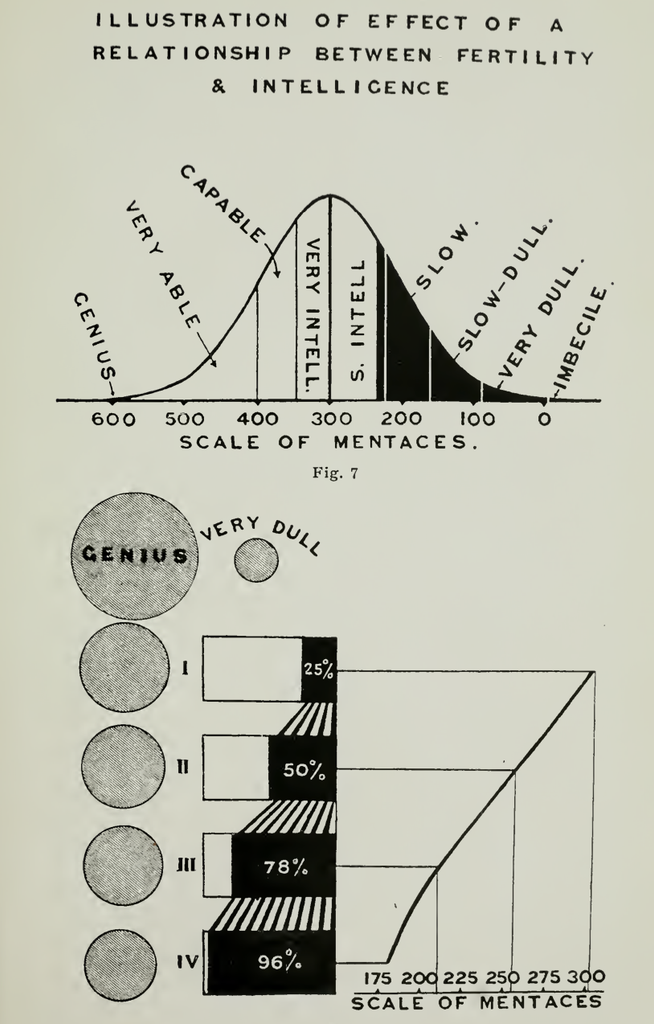
“Men and women do not mate at random; our measurements and observations show that, for practically every character, there is selective mating, in which like tends, to a reasonable degree, to mate with like. Suppose this ‘assortative mating’ exists; let us call a man or woman exceptional who possesses more of a given trait than nineteen out of twenty people. Thus, the tallest man in a random group of twenty individuals would be called exceptionally tall; the best student in a random class of twenty would be considered exceptionally intelligent.
“This is nothing more than a definition of what we shall provisionally call ‘exceptional.’ Now, from our study of the inheritance of human traits, I have found that fifty-two out of 10,000 marriages consist of an exceptional man and an exceptional woman, while 9,948 are couples in which neither partner, or only one partner, is exceptional.
“In the fifty-two exceptional marriages, the children are produced in a ratio of about 26 exceptional children to 26 non-exceptional children, so that roughly half the children are exceptional.
“Among the 9,948 non-exceptional couples, the ratio will be 474 exceptional children to 9,474 non-exceptional children, so that rather less than one-twentieth of the children will be exceptional.
“Thus, although eighteen times more exceptional children are born to ordinary parents than to exceptional ones, ordinary couples produce exceptional children at only one-tenth the rate of exceptional parents. The fact that great men are often born to ordinary parents is a paradox only if we forget that ordinary couples are 200 times more common than exceptional couples. The low probability that an exceptional son will be born to an ordinary couple is offset by the much greater number of such couples.
“Let us fully understand this: a minority in the community produces desirable traits in abundance, while a majority produces them only rarely and produces undesirable traits in excess. It must also be understood that social and political measures have reduced, and will continue to reduce, the severity of the selective death rate between these two classes. In the present state of social opinion, we have only one means of remedying this: the selective birth rate.”
Excerpt from The Groundwork of Eugenics, Karl Pearson, 1909.
These results alone explain why the spread of primary education made possible the emergence of so many geniuses. Elites may have a high probability of producing intelligent children, but because the masses are so much larger, most geniuses come from ordinary families, even though each such family has only a low probability of producing an exceptional person.
The problem Karl Pearson raised is that this mass of ordinary people is also the greatest source of undesirable traits. So how do we separate the wheat from the chaff?
A century after this research, we are able to make this selection accurately, efficiently, and humanely. Measuring the fetus’s nuchal translucency by ultrasound makes it possible to screen for a high probability of Down syndrome (trisomy 21) and offer a voluntary termination of pregnancy. Although eugenics is legally considered a crime against humanity and punishable under Article L 214-1—“The implementation of a eugenic practice aimed at organizing the selection of persons is punishable by thirty years’ imprisonment and a fine of 7,500,000 euros”—96 percent of women whose fetus is judged to be at high risk of trisomy 21 have an abortion.
This is negative eugenics, aimed at eliminating individuals (fetuses with trisomy 21), but reproductive medicine is opening the way to positive eugenics, which favors the birth of individuals with desired traits.
Some American companies, such as Genomic Prediction, offer couples who want it the option of providing their respective gametes, creating embryos through in vitro fertilization, sequencing the embryos, calculating polygenic scores for various conditions, and implanting the embryo with the most promising score. The process has a cost, but that should be weighed against the savings from avoiding disease: there is no healthcare spending on future patients who are never born.
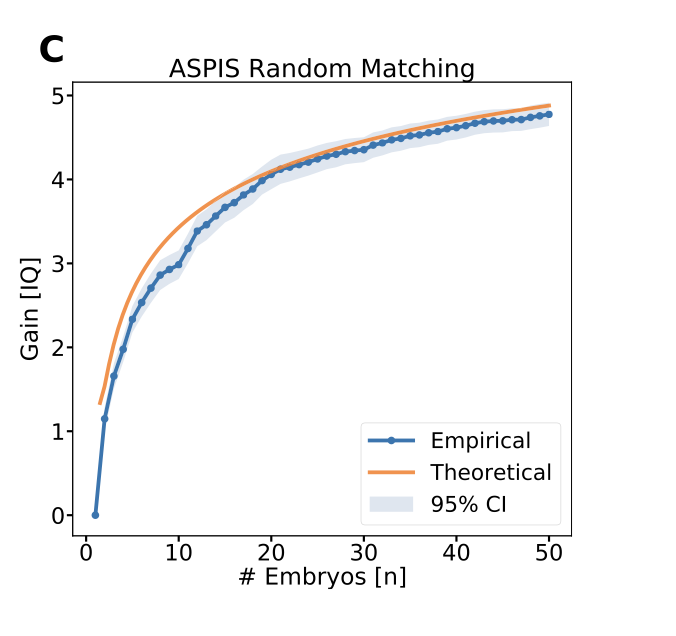
The technology is nevertheless limited by the number of embryos produced, which is itself limited by the number of eggs retrieved from the prospective mother. The more embryos there are, the greater the odds of finding one with a very promising polygenic score. So far, however, IVF remains a demanding medical process that yields only five to eight embryos per couple.
Two questions therefore remain open: Is the technology effective enough to justify its economic and human cost? Will embryo selection ever be socially accepted?
In 2013, Nick Bostrom published an article attempting to answer these two questions.
https://nickbostrom.com/papers/embryo.pdf
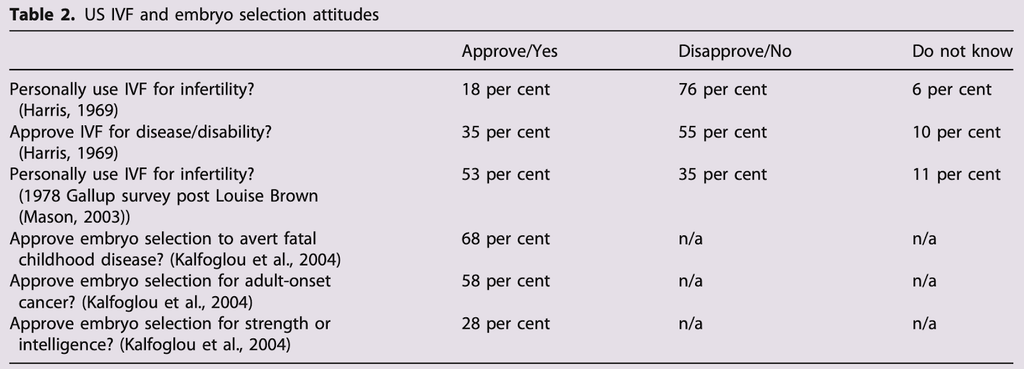
First, opinion polls conducted in the United States show how perceptions of in vitro fertilization changed from 1969 to 2003. (For reference, the first IVF in France was carried out by Jacques Testart, resulting in the birth of Amandine in 1983.) It is easy to guess that the personal use of IVF to address infertility was initially widely disapproved of—by 76 percent of respondents—but ten years were enough for a majority to approve its use. In 2004, although a majority of Americans already approved of embryo selection to avoid serious childhood diseases, only 28 percent approved of embryo selection for strength or intelligence. Nevertheless, as with IVF, it is reasonable to think that public opinion will change again very quickly.
As for the technology’s limits, particularly the small number of eggs available, Nick Bostrom speculates that embryonic stem cells might one day be used to produce gametes.
After an egg is fertilized by a sperm, the embryo begins its first cell divisions. These early cells are pluripotent embryonic stem cells: they can renew themselves and differentiate into any type of cell (a neuron, muscle cell, epithelial cell, blood cell, and so on). Bostrom’s proposal is to carry out an initial IVF, retrieve stem cells from the resulting embryo, differentiate them into thousands of gametes, and then perform large numbers of IVF procedures using those gametes. In this way, we would no longer be limited by the number of eggs; more importantly, we would be able to accelerate this eugenic process.
If we could produce thousands of embryos from the same couple, sequence them, and calculate their polygenic scores, it might be possible to select the best embryos, derive stem cells from them to produce new gametes, and carry out IVF again.
A selection process that would take several generations in real life could be completed in a laboratory in a matter of months, and its limits are impossible to estimate.
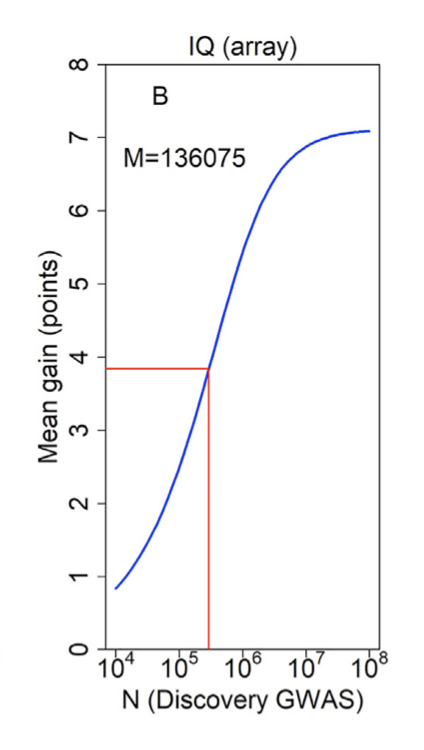
Bostrom’s hypotheses remain uncertain, but a 2019 study published in Cell has already attempted to estimate the hypothetical impact of widespread embryo selection:
https://www.cell.com/cell/fulltext/S0092-8674(19)31210-3?_returnURL=https%3A%2F%2Flinkinghub.elsevier.com%2Fretrieve%2Fpii%2FS0092867419312103%3Fshowall%3Dtrue
With current databases and the limited number of embryos we could produce, the estimated average gain would be 2.5 IQ points per generation. The paper also suggests that if more embryos were available per couple, the average gain could rise to between 4 and 5 IQ points. Moreover, if databases contained not merely a few hundred thousand sequenced genomes but hundreds of millions, the average gain could reach 7 IQ points.
The current limits of genetic engineering
Popular culture and the Nobel Prize in Chemistry awarded to Emmanuelle Charpentier and Jennifer Doudna for discovering CRISPR/Cas9, the molecular scissors, have fueled the “biohacking” craze and the idea that we will be able to modify our genes. American influencer Josiah Zayner, for example, has sold plenty of dreams while promoting his business selling homemade scientific equipment. In a famous video, Zayner injects the celebrated genetic scissors into his veins to impress his audience. Spoiler: injecting an endonuclease into the bloodstream does nothing. It will not enter cells and will be degraded very quickly. But it sells, and supports his branding as a scientist pushing boundaries.
Embryo gene editing has nevertheless already been carried out in many basic-research laboratories, under the strict rule that the embryos must never be implanted. In 2018, at a human genetics conference in Hong Kong, a Chinese researcher named He Jiankui presented his work on gene-editing the embryos of twin girls that had been implanted in a woman. He Jiankui deleted 32 base pairs from the CCR5 gene, which encodes a co-receptor for CD4, the gateway through which HIV enters lymphocytes. The researcher from Shenzhen claimed he had done this to allow an HIV-positive couple to have children resistant to HIV. But his protocol seems incoherent. First, highly effective drug treatments are now available to control the parents’ viral load and protect fetuses throughout pregnancy and up to delivery. Moreover, even if modifying CCR5 protects fetuses, it does not make them completely immune to HIV. Finally, we all carry two copies of each gene, one from our father and one from our mother, and both copies are coding. He Jiankui modified both copies of the CCR5 gene in one of the twins and only one copy in the other child. The latter would theoretically have little protection against HIV, yet her embryo was also implanted. The Chinese researcher defended this by saying that it was what the mother wanted.
The scientific literature points to a role for the CCR5 gene in rodents’ cognitive abilities.
https://elifesciences.org/articles/20985
Furthermore, people who naturally have a 32-base-pair deletion in this gene recover more quickly and more fully from cognitive impairment following ischemic stroke.
https://www.cell.com/cell/fulltext/S0092-8674(19)30107-2?_returnURL=https%3A%2F%2Flinkinghub.elsevier.com%2Fretrieve%2Fpii%2FS0092867419301072%3Fshowall%3Dtrue
If we consider the possibility that CCR5 is involved in cognitive abilities, the seemingly chaotic protocol suddenly appears coherent: two girls of the same age, with the same gestational development, living in the same family and attending the same school, but differing in the number of CCR5 copies that had been modified.
However, leaked details of He Jiankui’s work in MIT Technology Review showed that one of the twins had “off-target” mutations.
https://www.technologyreview.com/2019/12/03/131752/chinas-crispr-babies-read-exclusive-excerpts-he-jiankui-paper/
Cas9 is not unique because it can cut DNA—many other enzymes can do that—but because it can search for a sequence of our choosing, like Ctrl+F on a computer, using a guide RNA. Sometimes this molecular guided missile looks for the wrong sequence and cuts where it should not. These are called off-target effects.
CRISPR/Cas9 genetic engineering has generated much discussion in the scientific community. Because off-target effects can cause unpredictable adverse outcomes, and because traits of interest such as intelligence are shaped by hundreds of thousands of variants, it is much more likely that we will see widespread embryo selection in the future than embryo gene editing. Nevertheless, the technology may improve, and the risk of off-target effects may fall significantly.
Some midwits who have read a few popular articles about epigenetics will claim that the environment predominates in shaping individuals and the inequalities we observe in society.
First, it is important to explain that epigenetics involves changes in gene expression through the methylation, acetylation, or phosphorylation of DNA or histones. Histones are proteins that act like spools around which DNA is wound to form chromatin. Similar epigenetic modifications on different genomes will produce different outcomes. These modifications are reversible because they do not alter the DNA sequence, but they can sometimes be inherited if they affect germ cell lines. This means that a harmful epigenetic modification can persist in your descendants for a few generations before disappearing.
Interestingly, in 2021 researchers fused the Cas9 protein, which can search the entire genome for a specific sequence of our choosing, with an enzyme capable of methylating or demethylating DNA. This created a tool that can switch genes “on” or “off” without editing the DNA sequence.
https://www.cell.com/cell/fulltext/S0092-8674(21)00353-6?_returnURL=https%3A%2F%2Flinkinghub.elsevier.com%2Fretrieve%2Fpii%2FS0092867421003536%3Fshowall%3Dtrue
The future of optimizing our species and improving our innate, heritable traits will depend not only on selecting desirable genetic variants, but also on controlling how our environment influences gene expression.
A possible imbalance
If it becomes possible to choose the embryo we want, there could be several consequences. First, it would be possible to know the sex of the selected embryo. Second, there is a risk of reduced diversity in class II HLA proteins.
Class II HLA proteins (human leukocyte antigens) are involved in presenting antigens to T cells. In short, when a microbe enters your body, it is recognized as foreign and destroyed. Before that, cells known as antigen-presenting cells show a fragment of the microbe to T cells, so that they can recognize it and hunt it down. There is a wide variety of class II HLA proteins in our species because each variant can present only a fraction of all existing antigens. If we all shared the same class II HLA, then at the first epidemic able to evade that particular variant, we would risk extinction. The selection pressure exerted by pathogens has therefore maintained a high diversity of the genes that encode these proteins.
In theory, embryo selection could unintentionally cause an imbalance in these two areas: the male-to-female ratio and the diversity of class II HLA proteins. Public health institutions, however, would have little difficulty monitoring trends in these areas or implementing an algorithm to randomize embryo selection when these factors risk becoming unbalanced.
What effects would this have on our civilization?
This liberal, non-coercive eugenics would bring about a complete transformation of human civilization. Immature and irresponsible ideologies that infect low-quality minds would no longer have any influence on future generations. We would see a significant reduction in the resentment typical of those who cannot find their place in our advanced society. Today’s astronomical healthcare costs would fall dramatically.
Studies in the United States estimate the average IQ of prisoners at around 80. If intelligence contributes at least partly to the antisocial behavior that leads to incarceration, embryo selection would reduce crime rates and the prison population.
Consumer society offers us products likely to appeal to a given population and sell well to it. Improving that population would, by extension, change consumer goods and cultural output. The noblest works, which today are read, watched, and consumed only by a small aristocratic elite, would become widely valued popular culture. Street junk food and fast food would stop producing concentrated doses of fat and sugar, because such fare would no longer sell to a population with a high average IQ. They would have to adapt, offering high-quality products at the lowest possible price.
Intelligence follows a normal distribution, a Gaussian curve in the population. If we currently define a “genius” as someone in the top 1 percent of the population, then a population of at least 1,000 is needed to produce 10 geniuses. Likewise, producing 100 geniuses requires a population of at least 10,000. The total amount of intelligence in the world is therefore closely tied to population size. Falling birth rates around the world will mechanically lead to a decline in the number of geniuses. No country has yet found a lasting, genuinely effective way to revive birth rates and achieve a fertility rate above two children per woman.
Embryo selection would allow us to separate intelligence from population size, and quality from quantity. The Western world would inevitably lose population, but would lose none of its technological, economic, or military power. Better still, a new Renault Clio costs about 20,000 euros and a new Tesla Model X about 100,000 euros, five times as much as the Clio. Yet producing five Clios uses more resources than producing a single Tesla. With a more intelligent and wealthier population, it would therefore theoretically be possible to achieve economic growth while consuming fewer resources and despite a declining population.
The Kaczynskist, collapse-oriented rhetoric that a thermo-industrial society must collapse because infinite growth is impossible in a finite world is swept aside by the cold Victorian slap of eugenics. Eugenics is not merely desirable; it is necessary. Like the atomic bomb, you can oppose it, but your adversaries may not share your scruples. If selecting the best of our genes for future generations proves to be an evolutionary advantage in international competition, your descendants will be crushed just as the Native Americans were.
No one will impose this new reproductive process; people will ask for it, and our contemporaries will pay for it. Uncertainty is unpopular, and people prefer the assurance of having a healthy child with the highest possible abilities to playing Russian roulette with someone they already love. There will certainly be Amish communities of reproduction who have children the old-fashioned way, and, as in the United States, they will live in reservations protected by overdeveloped populations.
If I do not join in the sterile online debates about this fascinating subject, it is simply because it is better to work toward the birth of this world without going through a democratic process. Even if the anti-growth Kaczynskists wanted to oppose these extraordinary technologies, they have absolutely no way to stop me from selecting embryos on a massive scale and influencing human evolution. The world of tomorrow will be better, because we will be better, not the other way around.