


Foreword
Ever since the Scandinavian Leif Erikson’s voyage to Newfoundland (Vinland) and Christopher Columbus’s voyage to Cuba (then called Juana), the drive to expand has been a constant in European civilization, fueled both by the lure of novelty and by the possibility of extending its territory. This drive took shape in the conquest of the Americas by the great powers—France, England, Portugal, Spain, and the Dutch Republics. Through the force of history, that conquest gave rise to the first global superpower: the United States of America, founded on the philosophical utopia of a new democratic world based on trade and on the idea that its people had been chosen by God to carry out His design.
During the Cold War between two great blocs, liberal and communist, this superpower renewed its drive to expand and conquer. The rivalry moved into space, then stalled after the Moon race ended, amid the oil crisis and a shift in strategic priorities toward a space war fought through competing satellites. The space race resumed with the arrival of new players, including China, which brought the idea of a race into space back to life. Interest in space also grew out of the entrepreneurial successes of the dot-com boom, which gave rise to what is known as “New Space”: a sector made up of companies of all sizes, from SpaceX and upstart Rocket Lab to the quiet giant Blue Origin. These companies no longer serve only political demands; they also respond to the new needs created by the expansion of digital services.
Digital technology has now become enormously important, driving a steady rise in the need for data storage, computing power, and information distribution. This, in turn, is increasing pressure on the resources required to run information services. These services depend on the extraction of rare materials, which China currently dominates, retaining an advantage in both mining and refining them for industrial use. Energy is another key factor for these information systems, as the power consumption of data centers makes clear. One example is Colossus-1, xAI’s data center, which consumes as much electricity as 100,000 American households. Earth’s resources are limited, and degrowth is not an option simply because economic growth enables social services to function and, more broadly, keeps states running. We therefore need to move beyond the planetary paradigm.
Moving beyond that paradigm means thinking on the scale of civilization. This brings us to the concept developed by the Soviet astronomer Nikolai Kardashev, who proposed several types of civilization. A Type I civilization, or planetary civilization, is the kind we know today, with an estimated energy level of 10^16 watts. A Type II civilization, or multiplanetary civilization, would capture the full power of its star, reaching an estimated energy level of 10^26 watts. Finally, a Type III civilization, or galactic civilization, would control all the energy in its galaxy, with an energy level ranging from 10^36 to 10^327 watts.
In this series, we will explore the transition from a planetary to a multiplanetary civilization through a journey across our solar system. Along the way, we will consider economic and political questions, cultural influences, and technical challenges, drawing on real projects.
Enjoy the read!
The Three Stages of Expansion
This series is divided into three chapters to make it easier to read, so that readers do not feel as though they are tackling an entire novel in one sitting. We will try to explain the political and economic stakes of human expansion into the solar system, along with the many technical challenges we will inevitably face as we work toward Kardashev’s Type II scale, associated with a stellar civilization. The large amount of detail is not there to impress, but to help convey the staggering scale of this undertaking. It is also worth noting that this series was written during the first quarter of 2026, and the information it contains may change. We will begin with the Moon, then move on to Mars, and finally consider other bodies in the solar system.
Chapter I — The Moon
The first step toward a multiplanetary civilization
Photograph from the Apollo 15 mission
The Moon has inspired human curiosity since the dawn of humanity. That curiosity has taken the form of religious worship, as in the lunar triad of Selene, Artemis, and Hecate, as well as speculation about what the Moon might be—speculation that opened the way to fiction. Jules Verne’s From the Earth to the Moon, for example, offered a forward-looking account of human travel to the Moon. The book drew on scientific work, including that of Arago, Newton, Cassini, and others, to estimate how many days it would take to travel from Earth to the Moon in a cannon shell fired from Florida by the Baltimore Gun Club.
Today, nearly 50 years after the Apollo program, the Moon is once again coveted, for more practical reasons: political prestige, the commercial exploitation of the satellite’s resources, and the wider ambition to live somewhere other than Earth. It is therefore only natural that institutions and companies in the sector are turning their attention to the Moon. Its proximity makes it possible to test, at full scale, the technologies needed to travel to space and build installations in an extraterrestrial environment, without facing problems caused by distance, such as communications latency, or by the infrequent launch windows available for lunar missions. The Moon also offers a real-world testing ground for the challenges of living on a body that lacks the conditions needed to support life, including life-support systems and ways to counter the physiological effects of living in a different gravity. In a sense, the Moon is the first step toward reaching Level II on the Kardashev scale.
The Artemis program: two giants compete to land on the Moon
A brief history of the program
Established under the first Trump administration as the successor to the abandoned Constellation program, Artemis aims to establish a sustained American presence on the Moon. The plan is to build a permanent scientific base and, above all, to explore ways of turning the satellite’s resources into a source of economic profit. The program draws on work already undertaken to develop a class of rocket capable of reaching Mars: the SLS. It was initially developed as a broader program, but financial constraints reduced it to a single rocket capable of carrying four astronauts into lunar orbit and returning them to Earth.
The launcher draws on technology developed for the American Space Shuttle program, including the four RS-25 engines on its core stage and the solid rocket boosters that provide additional thrust to put it on a translunar trajectory. The rocket is a frequent target of criticism in the space community because it is considered too expensive and too experimental, given its very low launch rate compared with the Saturn V. The Saturn V launched five times in less than a year, whereas the SLS has flown only once, in 2024, and is awaiting its second launch, scheduled for March if all goes well. The rocket looks like a combination of the Space Shuttle—with its orange tank and two side boosters—and the Saturn V, if one compares the Apollo command module with Orion, which itself grew out of the Constellation program.
Developed between the late 2000s and early 2010s, the SLS also faces a new challenge: the arrival of New Space companies. The best-known of these is SpaceX, whose Falcon 9, followed by its heavy-lift variant, the Falcon Heavy, has completely changed the economics of space launch through booster reuse. The striking contrast between these two launch vehicles—which, of course, have different purposes and capabilities—raises questions about the future of the SLS. This is all the more pressing at a time when SpaceX’s Starship is taking its first steps. The press has sometimes crudely called it “Elon Musk’s mega-rocket.” Meanwhile, Blue Origin, the competing company owned by Amazon founder Jeff Bezos, is developing New Glenn, a heavy-lift launcher. Both companies are attracting investors, partly because of the revenue generated by satellite internet services such as SpaceX’s Starlink.
To ensure crewed access to lunar orbit while Starship is still in development, Congress allocated the funding needed for the SLS to fly the Artemis I through Artemis missions. This funded five SLS launches: one uncrewed flight, which took off in 2024, and four crewed flights. Alongside the SLS, NASA established a competition called the Human Landing System, or HLS, inviting private companies to develop a lunar lander. The lander would allow astronauts travelling in the Orion capsule to transfer to a vehicle that could take them down to the lunar surface, much as the Lunar Excursion Module did during Apollo. The difference is that, under Artemis, the capsule and the lunar lander are separate vehicles. The two companies currently competing are SpaceX and Blue Origin, each of which brings a different vision for the future of the Artemis program.
Notes
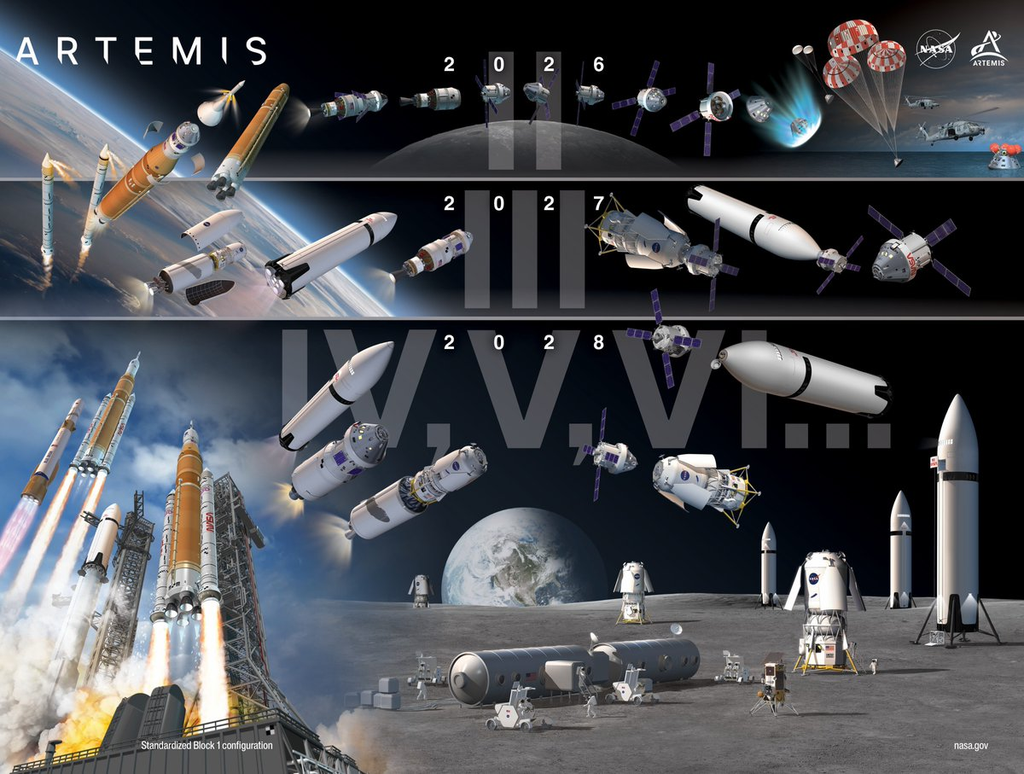
On February 27, 2026, NASA revised the Artemis plan, making major changes to the schedule and to the roles of Artemis III, IV, and V. Artemis III has been moved forward to 2027, but it will not include a lunar landing. Instead, the mission will test one or both lunar landing systems—the Starship HLS and Blue Moon Mk2—and certify their docking operation with the Orion capsule in low Earth orbit, in a mission similar to Apollo 9. The next step, in 2028, is expected to see two lunar landings rather than one: Artemis IV and V, using both systems if Artemis III goes smoothly. Artemis V will mark the beginning of lunar construction work.
SpaceX’s proposal: Starship HLS
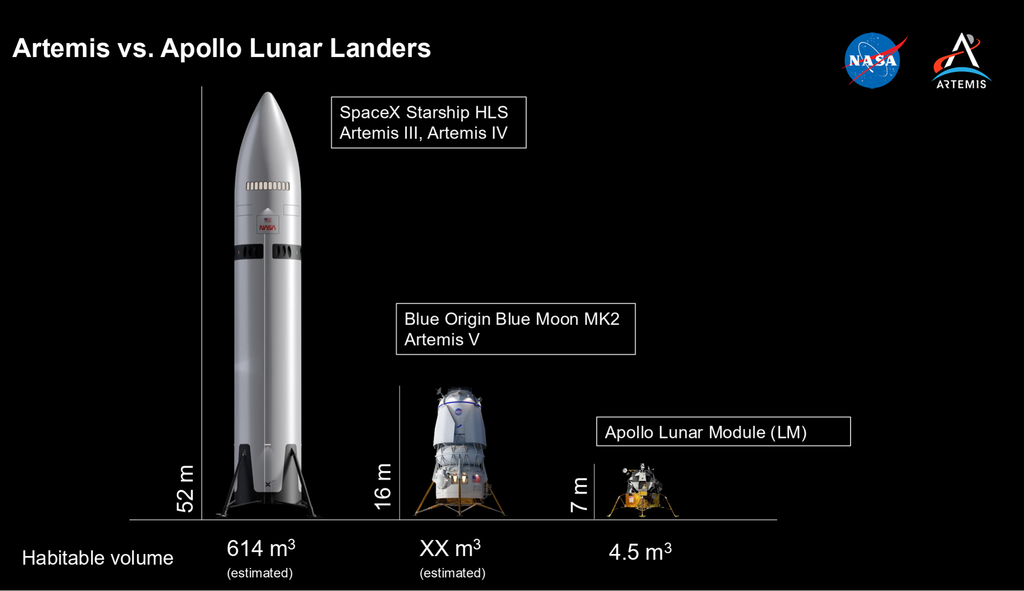
SpaceX’s proposal is based on its Starship program, which is still under development. The plan depends on establishing orbital refuelling. It would involve three systems based on Starship V3: a Starship “refueller,” a Starship “tanker,” and a Starship “HLS.” In practice, a Starship tanker would be sent into orbit. It would resemble a Space Shuttle external tank but would also include propulsion systems. Several Starship refuellers would fill it with propellant before the third system, the Starship HLS, was launched. The HLS would then refuel from the tanker before setting out for the Moon.
On paper, this all sounds extraordinary. There is no point beating around the bush: the system is still under development and will take more time. Starship V3 has not even begun testing. The new launch table is not quite ready, and the catch tower at Starbase is not yet complete enough to support a Starship V3 launch test. Delays have also been caused by complications with the new booster version. SpaceX’s planned stock market listing later this year could motivate its teams to speed up Starship development, potentially allowing them to work toward an uncrewed demonstration of the vehicle in 2027 and prepare for Artemis III in 2028, which would see humans return to the Moon. Another important factor is Blue Origin’s arrival as a serious competitor for the Moon. For now, SpaceX’s HLS business model differs from Blue Origin’s in the ambitions the company has expressed.
Blue Origin’s proposal: Blue Moon
Blue Origin, founded by Jeff Bezos, is developing a competing architecture in response to NASA’s request for a crewed lunar lander. Its original proposal brought together several companies to design the vehicle, including Lockheed Martin and Northrop Grumman, who were to work with Blue Origin on the project. After SpaceX initially won NASA’s contract, Blue Origin had to revise its proposal, putting forward two lander designs: a lighter, uncrewed version that could be launched in a single flight, and a larger version capable of carrying astronauts from lunar orbit to the surface and back.
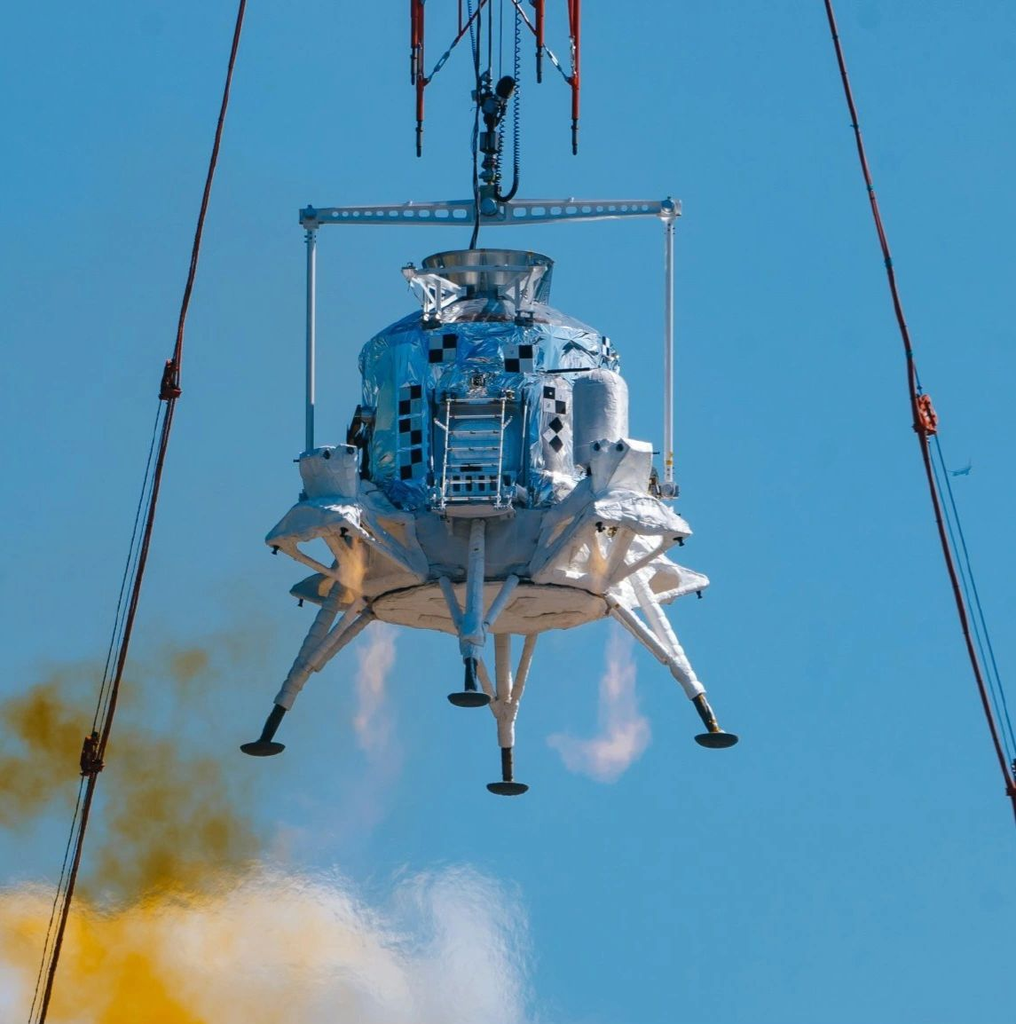
The lighter cargo version, Mk1, can be launched on a single New Glenn. The heavier Mk2 lander requires three launches and also needs to be refuelled in orbit, so that the transfer vehicle can carry the lander from Earth orbit to lunar orbit. In light of developments and the criticism that followed NASA’s decision to select SpaceX for the HLS contract, NASA turned to Blue Origin again for Artemis V, awarding it funding to develop its lander. This year, the company decided to test its Mk1 lander. This will allow it to test the BE-7 engine, which will also power the Mk2 version, and gather real-world data on the vehicle’s behaviour during a lunar landing. Compared with Starship, the system’s drawback is its lower payload capacity, which limits its long-term potential for larger-scale projects.
The main takeaway from the two proposals is that SpaceX offers a more ambitious but riskier architecture, because it requires far more propellant and therefore more orbital refuelling operations. Blue Origin is working on a more conventional architecture, but with more limited prospects. The two proposals are not mutually exclusive, however, so both landers could take part in different Artemis missions. One thing is certain: SpaceX intends to use its system for its own purposes, not solely for Artemis.
The Moon as an economic zone
Turning the Moon into a new laboratory like the ISS is clearly vulnerable to political shifts and changing priorities. Making the Moon a profitable investment is therefore essential to sustaining the lunar venture.
The Commercial Lunar Economy Field Guide, by Michael Nayak
(DARPA engineer and fighter pilot)
The Artemis program is not the only project aiming to establish a continuous presence on the Moon. Other companies are working on commercial uses for lunar resources. In response to this need, Air University, which is affiliated with the U.S. Air Force, asked various specialists and stakeholders to develop ideas for making the Moon a source of revenue. The resulting report takes the form of a guide. Each section discusses an aspect of lunar settlement, whether energy, logistics, communications, or thermal management, and gives details on how to establish mining operations on the lunar surface. The report also explores possible paths for further development.
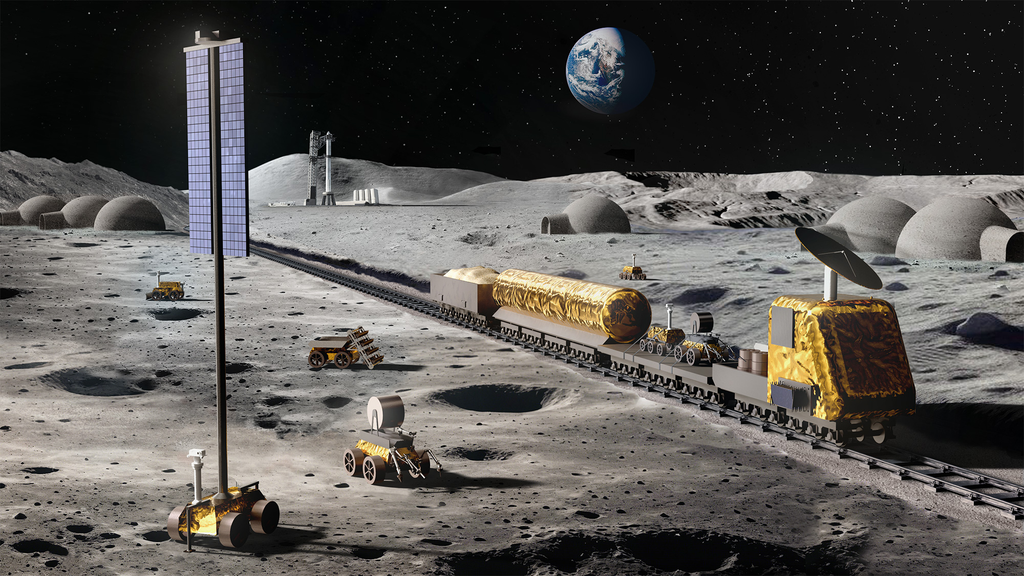
The second part of the report is the most interesting for its technical details on how humans envision settling the Moon. Consider a seemingly simple question: “How do we generate enough energy to run lunar installations?” One possible answer might be: “Let’s do what we do on Earth and build a solar farm on the Moon.” The report first discusses the Moon’s rotation period and how it would affect solar power generation: without sunlight, solar panels produce no electricity. It therefore proposes installing long arms with photovoltaic panels high enough—200 metres above the surface—to capture at least some energy even when the ground below is in darkness. The report then considers how to distribute the power to the different systems on the surface. Another chapter discusses building a railway on the Moon to handle surface logistics and overcome the limits of rovers, including wear and limited range, when transporting equipment or resources extracted from the lunar soil. According to the chapter’s authors, the railway would need to be built robotically.
Alongside the railway, the report addresses the design of lunar landing zones to prevent engine thrust from kicking up regolith during landing. The proposed method is to vitrify the regolith with lasers, creating a kind of runway for landers travelling between the surface and orbit. This would stabilise the ground and help protect passengers and cargo. Another chapter discusses the Earth–Moon connection, proposing refuelling depots in orbit to enable a continuous flow of transport between Earth and the Moon. All of this shows that establishing a lunar presence would require transporting a large amount of equipment to our natural satellite to lay the groundwork for a local lunar economy. It also shows that we already have technical solutions that could make the Moon a major economic zone.
Moon Base Alpha: “A gigafactory on the Moon?” — Elon Musk’s plans for the Moon
Since 2017, Elon Musk has been floating the idea of building a self-sustaining city on the Moon for both civilizational and economic reasons, just as he has with his goal for Mars. For a long time he prioritised Mars over the Moon, but since early 2026 he has turned his attention back to the Moon for two reasons: to secure SpaceX’s role in the Artemis program, given the company’s involvement and delays, and to reassure potential investors ahead of the company’s planned stock market listing later in 2026. Another important factor in understanding the goals of his lunar project is the merger of xAI, whose flagship product is the LLM Grok, with SpaceX. This gives the company a very different profile.
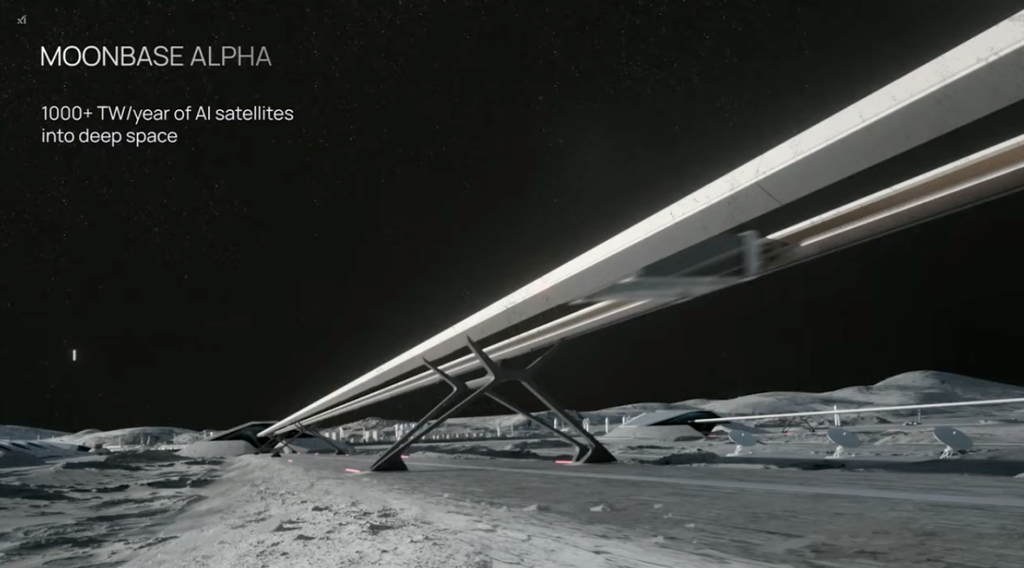
The head of SpaceX wants to manufacture AI satellites on the Moon and launch them into Earth orbit. The phrase “AI satellite” refers to the company’s ambition to build a data centre in orbit to run xAI’s models. The data centre could become a mega-constellation of one million satellites. This is a colossal project. For comparison, Starlink, the satellite internet project, currently has about 8,000 satellites. It began in 2019, and its weekly launch schedule gives us some sense of the launch rate a constellation of that size would require. Such frequent launches could quickly damage ground facilities and create licensing problems with the Federal Aviation Administration (FAA), which regulates the maximum number of launches.
Even given the logistical and regulatory barriers, the project might seem counterintuitive, or even pointless. The energy required to manufacture satellites on the lunar surface and then send them into low Earth orbit appears to be an enormous waste of resources. But on closer inspection, the idea makes some sense in light of orbital mechanics and research into in-situ manufacturing. The Moon has two advantages Earth does not: it has no atmosphere and its gravity is weak. Both factors greatly reduce the energy required to launch a vehicle into orbit. This helps explain SpaceX’s proposal to build at least some of its AI satellites on the Moon and send them into Earth orbit. In orbital mechanics, reaching low Earth orbit from Earth’s surface requires a delta-v, or change in velocity, of 9.4 km/s. A trajectory from the lunar surface to a return trajectory toward Earth requires a delta-v of 2.47 km/s, considerably less.
Even so, we need to ask how SpaceX would propel its satellites along such a trajectory. Elon Musk gave an answer in a presentation dated February 11, 2026, where he proposed an electromagnetic catapult to launch the satellites, taking advantage of the Moon’s lack of atmosphere and low gravity. That solution alone would not be enough: the satellites might also need inexpensive ion thrusters to guide them into their intended orbits.
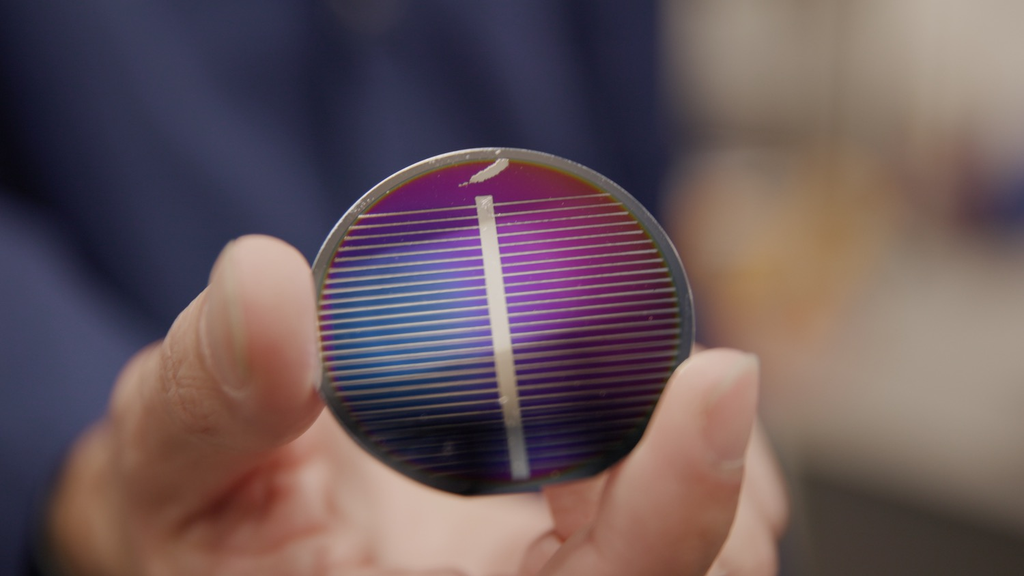
The question is how much of a satellite could be manufactured in situ. As one example, researchers have produced photovoltaic cells using simulated lunar regolith. Metals found on the Moon could also be used to make structural components for satellites. The goal would be to minimise the number of components imported from Earth and make the production chain as profitable as possible.
This project would probably generate revenue for the company and help fund other projects more directly related to human exploration of the solar system. One possible project would be a training base for Mars, where procedures could be developed and tested in real-world conditions, and where planners could consider what life on the Red Planet might be like. A more distant possibility would be to turn the Moon into a tourist destination, giving visitors the chance to walk across its surface and follow in the footsteps of the five Apollo crews, or to enjoy its very low gravity by trying new kinds of extraterrestrial recreation…
The Chinese perspective
Across the Pacific, the Moon is also an object of political and economic competition with the United States. This could be called the second round of the Moon race. In the first, the Americans and their Saturn V defeated the Soviet Union and its N1 rocket. The new round is unfolding alongside the race for AI and the conflict over control of Taiwan. Now let’s get to the heart of the matter: can Beijing overtake the Americans and win this competition?
The Chang’e program: China’s first robotic steps on the Moon
The Moon has been at the heart of China’s robotic space exploration projects since the early 2000s. China has launched no fewer than six missions to our only natural satellite to learn how to travel to the Moon and prepare to send taikonauts to its surface. These missions are part of the Chang’e program, directed by CAST, the China Academy of Space Technology, in partnership with the CNSA, the China National Space Administration (the Chinese equivalent of NASA or ESA).
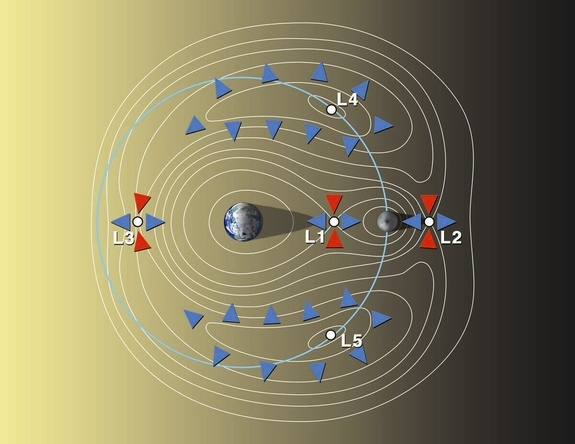
The program’s first phase involved building the Chang’e 1 orbiter, launched in 2007 to conduct a 3D scan of the Moon and analyse the chemical composition of its surface. Chang’e 2, launched in 2010, helped the Chinese better understand navigation to and around the Moon. It used the Lagrange point, or L2, as a stable departure point for its 2012 encounter with the asteroid Toutatis. This helped prepare China for asteroid missions before the spacecraft continued into deep space to complete its mission.
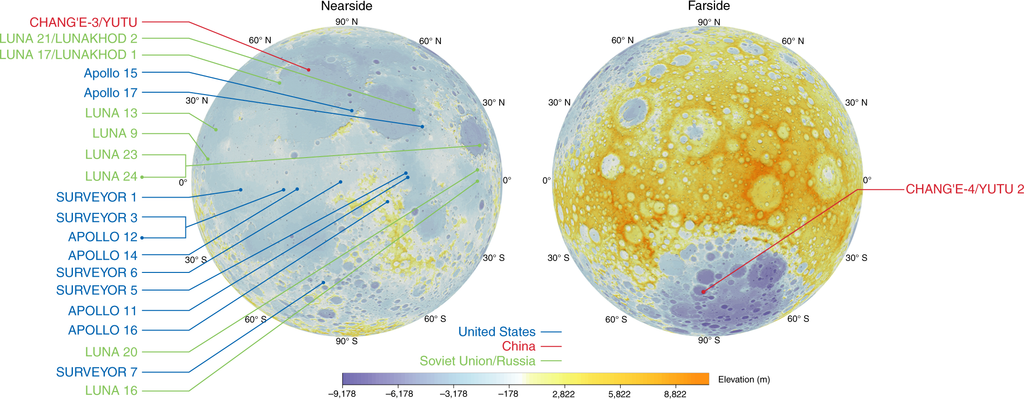
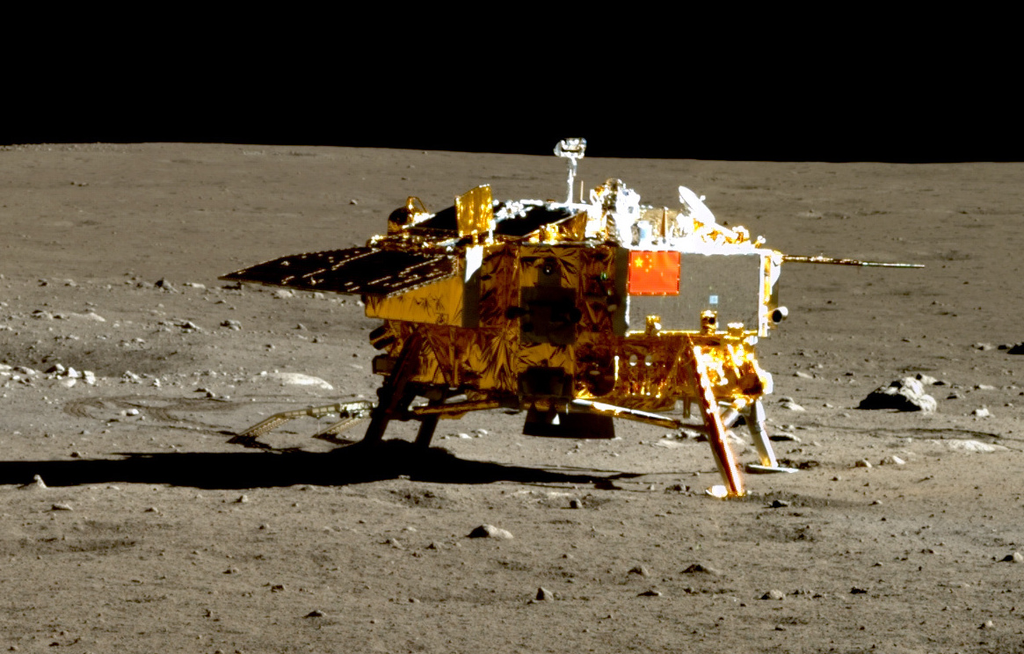
The second phase focused on building a lunar lander carrying a lightweight rover, Yutu-1, to explore the lunar surface. Chang’e 3 launched in 2013 and landed in Mare Imbrium. It marked the first time an object made in China had touched the lunar surface. In 2018, Chang’e 4 repeated the mission with a similar rover, Yutu-2, but a different destination: the South Pole–Aitken Basin.
The third phase involved returning lunar samples. Launched in 2020, Chang’e 5 expanded the program’s ambitions by carrying out a rendezvous manoeuvre in lunar orbit to return samples collected at the Oceanus Procellarum landing site. Since the mission had no rover, sample collection was limited to the area around the lander. Launched in 2024, Chang’e 6 was intended to achieve the same goals as its predecessor, but at the Apollo Basin.
The fourth phase will explore the lunar south pole in greater depth. Chang’e 7 is scheduled to launch this year and will target Shackleton Crater, while Chang’e 8 is scheduled to launch in 2028 and will target Mons Mouton. Chang’e 8 will also test 3D printing with in-situ resources, helping to develop the technologies needed to build a crewed lunar base. Each mission is intended to test one part of a crewed mission to the Moon: translunar manoeuvres, lunar landing, rendezvous in lunar orbit, and the use of local resources.
China’s experience with human spaceflight
Alongside the robotic Chang’e program, China has also worked on crewed spaceflight with the Shenzhou spacecraft, which marked its first steps in sending people into low Earth orbit. The project dates back to the late 1980s. Several concepts were proposed in its early stages, including a space shuttle called “Tian Jiao,” with a shape similar to the shuttles developed on both sides of the Iron Curtain. The architecture ultimately chosen by the Chinese space agency, the CNSA, was Project 921, or Shenzhou, which was heavily inspired by the Soviet Soyuz spacecraft. The Shenzhou capsule is 8 metres tall and 2.8 metres in diameter.
The capsule’s first uncrewed launch took place in November 1999, aboard a Long March 2F rocket launched from the Jiuquan Launch Center. Four more uncrewed missions followed, one of which suffered a partial failure. In 2023, taikonaut Major Yang Liwei made China’s first crewed spaceflight aboard Shenzhou-5, spending 21 hours in orbit. China’s second crewed flight carried two taikonauts, Fei Junlong and Nie Haisheng, on a longer, four-day mission. The third mission, Shenzhou-7, carried three taikonauts—Zhai Zhigang, Liu Boming, and Jing Haipeng—for a shorter, two-day flight. Its purpose was to conduct China’s first spacewalk.
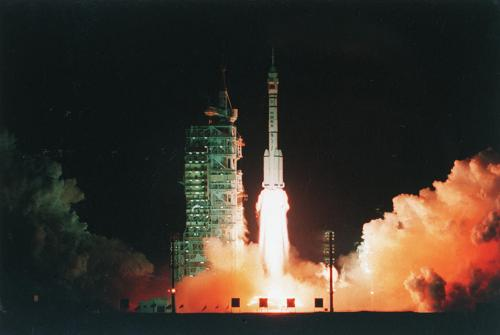
After mastering the basics of crewed capsule flight around Earth, China began working on orbital space stations. These are an essential step toward lunar exploration: they help scientists understand the effects of spaceflight on the human body and the logistics of operating in space. This led the CNSA to launch the Tiangong project.
China’s first space station, Tiangong-1, was launched in 2011. In November of that year, the uncrewed Shenzhou-8 spacecraft carried out the first rendezvous and docking in Earth orbit using an automated docking system. After that demonstration succeeded, a spacecraft carrying three taikonauts launched in March of the following year on Shenzhou-9. The crew spent three days testing life aboard a pressurised orbital module. The mission was repeated in 2013 with Shenzhou-10, this time lasting 12 days. Tiangong-1 was deorbited more than two years after the Shenzhou-10 mission.
The program’s second phase involved developing the Tianzhou cargo spacecraft. To support this work, Tiangong-2 was placed in orbit in September 2016. Its first mission was Shenzhou-11, which allowed the crew to test a longer stay in orbit. The second part of Tiangong-2’s operational life involved the Tianzhou-1 mission, launched in 2017 to test different docking modes. The station was deorbited in 2019, two years after the end of Tianzhou-1’s mission.
Building on these experiences, China began the third phase of orbital station assembly with the launch of the Tianhe core module in April 2021, the first component of the Chinese station. The second station module, Wentian, a laboratory module, was launched in July 2022. It was first placed at the front of the station, then moved to a lateral position alongside the third module, Mengtian, another laboratory module. The station broadly follows the same cross-shaped design as the Soviet Mir station. Taikonauts live aboard it continuously, as they do on its older sister, the ISS. They travel there in Shenzhou capsules and receive supplies in orbit from Tianzhou cargo ships. The station can dock two Shenzhou spacecraft and one Tianzhou cargo ship. The ability to carry out spacewalks also gives crews practice working in spacesuits. Since the station began operating, there have been 10 Shenzhou missions, including one uncrewed rescue mission, and nine Tianzhou missions. This year, the space station will be joined by the Xuntian space telescope, which will be able to dock with the station and later detach for repairs or adjustments.
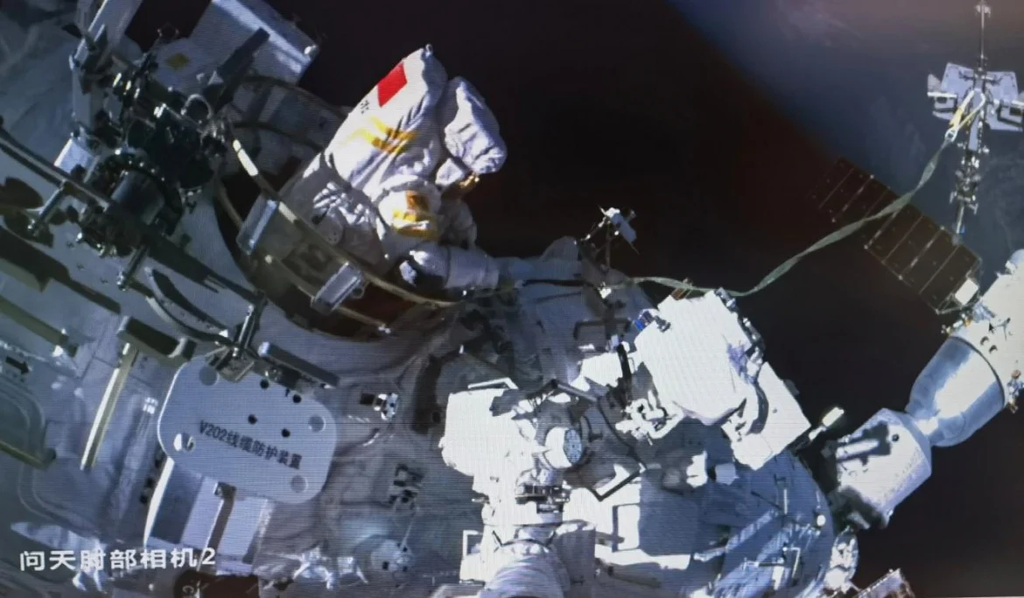
China’s proposal for a crewed mission to the Moon
After testing robotic lunar landings with the Chang’e missions and crewed spaceflight with Shenzhou and Tiangong, China is now aiming for the Moon to compete with the Western Artemis program. This will require a new generation of spacecraft—the Mengzhou–Lanyue pair—and more powerful launch vehicles capable of carrying Chinese astronauts to the lunar surface, including the Long March 10.
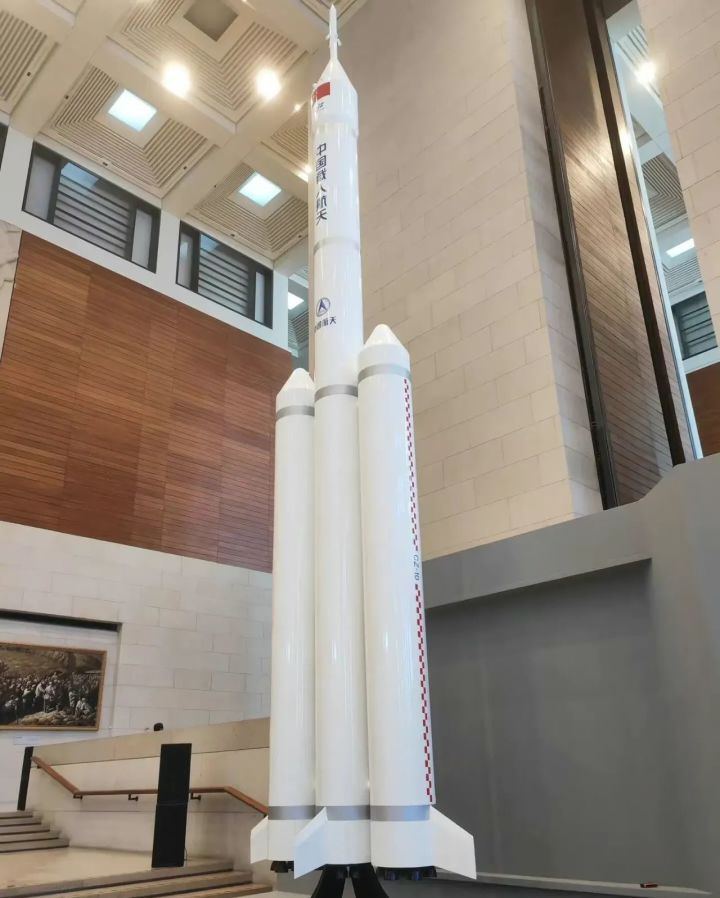
What we already know is that China’s crewed lunar mission will rely on three launches of the Long March 10 rocket. Its architecture is comparable to SpaceX’s Falcon Heavy: a central booster with two side boosters. The rocket is initially powered by 21 YF-100K engines that burn a mixture of kerosene and liquid oxygen, as the Falcon Heavy does. Like its American counterpart, it is designed to recover all three boosters, reducing costs and enabling a faster launch cadence to optimise the program. Using similar rockets should make the overall mission architecture more consistent and less complex.
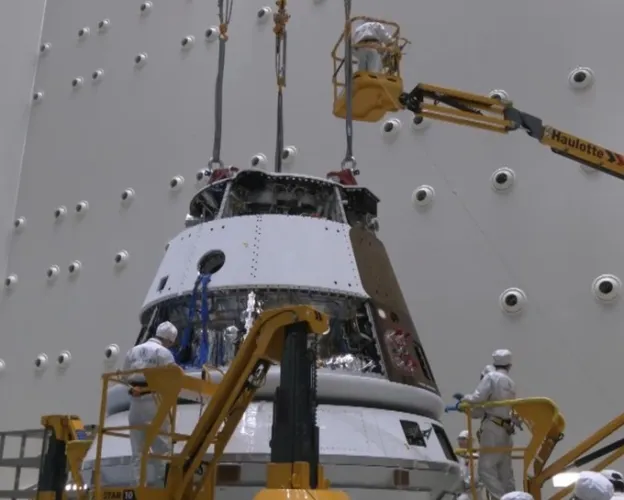
Two launches will be needed to send Lanyue to the Moon: one for the lander and another for the propulsion module that will perform the translunar injection. The lander can carry two taikonauts. It is relatively modest compared with the systems planned for Artemis: its estimated height is 9 to 11 metres, compared with 16 metres for the Blue Moon Mk2 and 52.3 metres for Starship HLS. However, its “smaller” dimensions make it possible to plan a simpler architecture that requires less energy.
Once in lunar orbit, the lander will be joined by the Mengzhou capsule, the Chinese equivalent of the American Orion capsule, though it can carry only three crew members compared with Orion’s four. After Lanyue and Mengzhou rendezvous in orbit, two taikonauts will board the lander and head for the lunar surface. After their expedition there—and, no doubt, planting the flag—they will return to Mengzhou, where the third crew member will be waiting, and the crew will travel back to Earth.
After reading this, one might think the Chinese will simply recreate Apollo half a century later. But China’s lunar ambitions are not limited to the Mengzhou–Lanyue pair. The CNSA teams are also working on the Long March 9, which was initially intended to be China’s version of the SLS but has gradually come to resemble SpaceX’s Starship more closely. This suggests that China may have a more ambitious lunar project in mind.
The major unknowns of lunar projects
Establishing a civilization on the Moon would be a leap into the unknown, with no precedent in history. We are not setting out to settle another territory that already has conditions suitable for human life and resources that can easily be transformed into the energy needed to sustain a society. In this case, we would have to create the necessary conditions and change the way we process lunar resources. We also have very little data on how the extreme environment of the lunar surface affects the human body.
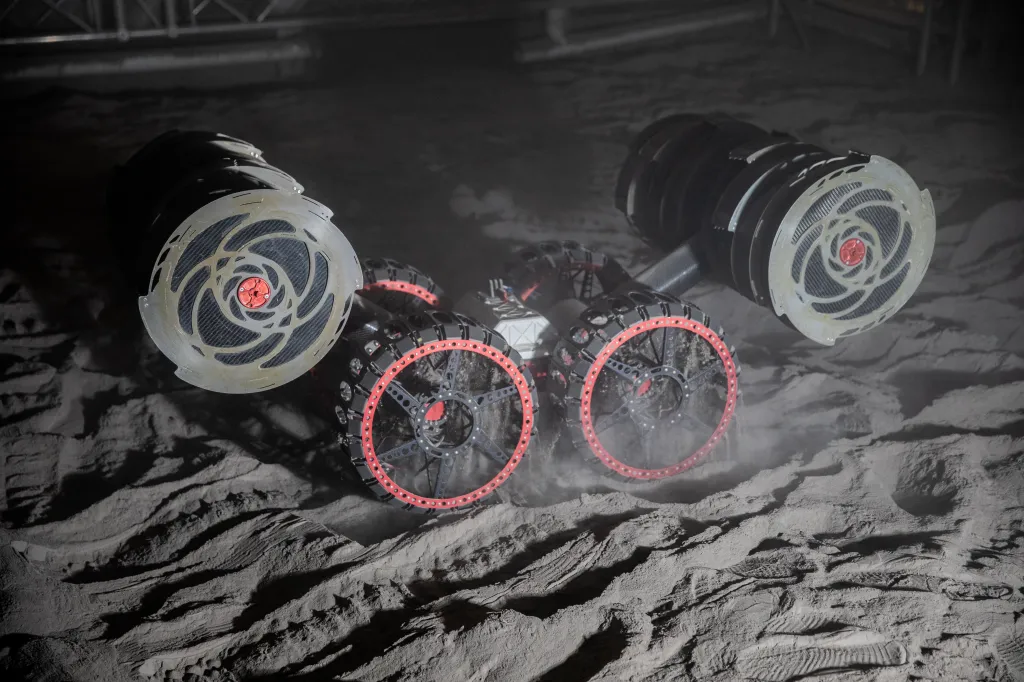
First, the available data on industrial production on the Moon comes from experiments conducted on Earth using synthetic materials designed to resemble lunar matter as closely as possible. These experiments have not yet been carried out with actual lunar resources under real lunar gravity. Research is nevertheless under way into how to extract local resources. NASA’s IPEx experiment, the ISRU Pilot Excavator, for example, is evaluating how a small excavator rover can operate and recharge easily without human intervention.
The scale of lunar industrial production will also be a challenge. Establishing such an enterprise will require large amounts of energy to power the necessary production equipment. That creates substantial logistical needs in the early stages and requires major investment before any return is possible. This level of investment could deter potential investors.
The substantial logistical support needed to establish profitable industrial production on the Moon is still largely an unknown. It will require more launches from Earth, but also a way to sell the products back on Earth, which means bringing them back. For now, this logistics chain depends on two key elements: rapid reusability, to launch as many spacecraft to the Moon as possible, and orbital refuelling, to increase how much can be transported from one point to another without requiring enormous launch vehicles. Exporting resources produced on the lunar surface to Earth would also require local production of propellant—fuel and oxidiser—to reduce the number of launches needed to supply the export logistics chain.
Finally, human life on the Moon will face numerous constraints. Low gravity will inevitably affect the muscle mass of future lunar settlers, and food will be a challenge, since large quantities will have to be produced to feed the entire colony. We must also consider the psychological effects of a prolonged stay on the Moon. Settlers will first have to accept living in confined spaces. They will also have to contend with the lunar night, which lasts 14.75 days and plunges the base into darkness. To withstand the lunar environment, where micrometeorites rain down on the surface and cosmic radiation is present, protective layers will need to be built from local materials mixed with a binding agent. These layers will shield habitats and critical systems.
All these challenges will have to be overcome in real-world conditions, which means being prepared to take risks.
To be continued (Chapter II: Mars)