

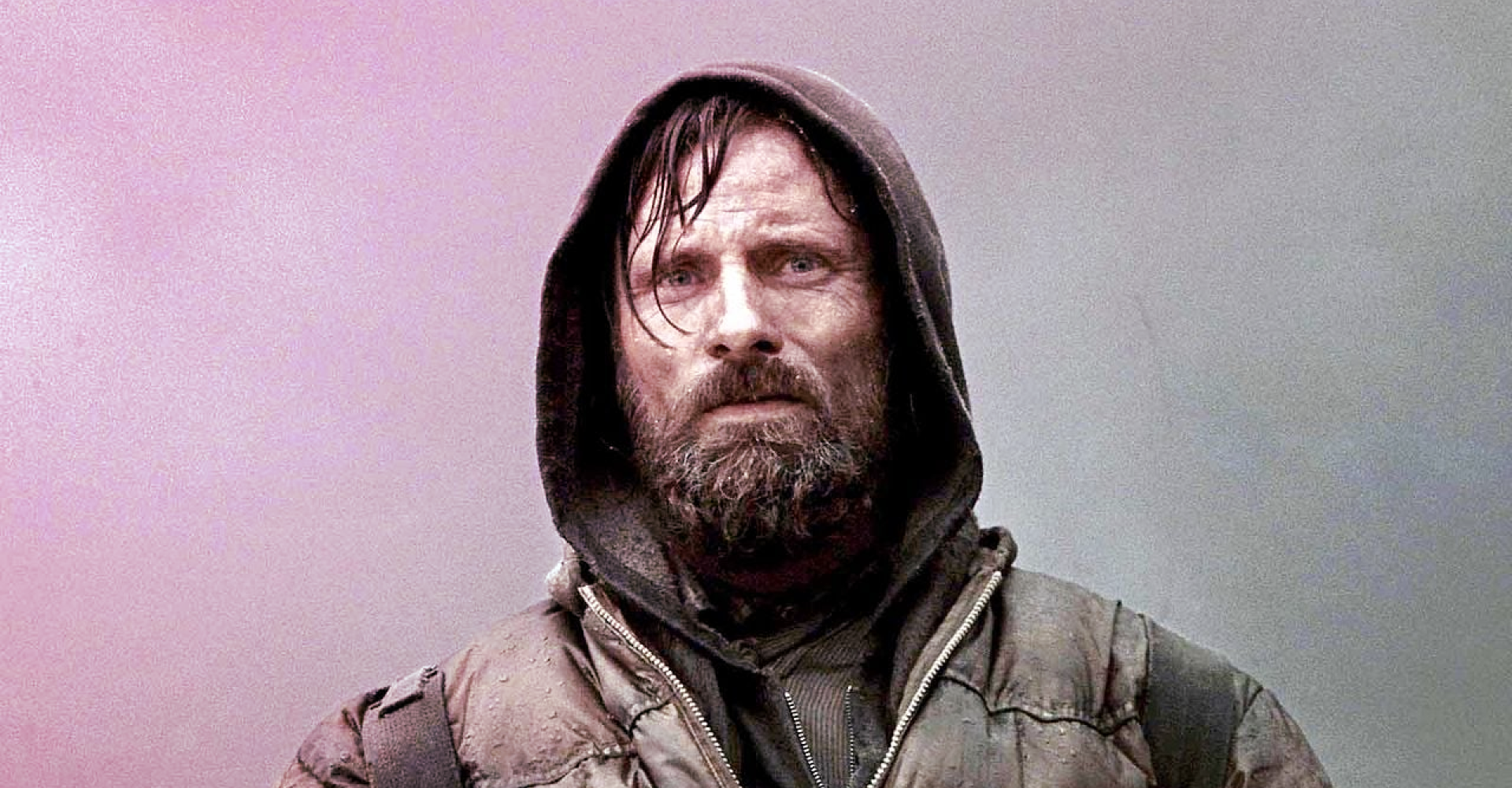

Henry Gee argues that humanity, weakened by total dominance, demographic decline, and ecological collapse, is heading toward inevitable disappearance. He believes our only chance of survival is to become an interplanetary species before it is too late.
The human empire already in decline
Humanity does not have much time left.
You, me, our families, our lineages, everywhere on Earth: we may already be on the slope leading to our disappearance. And this would not be an extinction occurring hundreds of thousands of years from now, somewhere in the depths of geological time, but a process that may already have begun.
That, at least, is the thesis of the latest book by Henry Gee, the celebrated British paleontologist and biologist, author of the hugely successful A (Very) Short History of Life on Earth. Alongside his books, he is one of the editors of Nature, the leading scientific journal—which, incidentally, is strongly left-wing politically, but always stimulating.
In The Decline and Fall of the Human Empire (published in French by Jean-Claude Lattès), he sets out to do nothing less than tell the story of our inevitable downfall—and perhaps the only way to escape it.
The form he chose left me skeptical: each chapter begins with a quotation from Edward Gibbon’s classic The History of the Decline and Fall of the Roman Empire, and Gee tries to draw a parallel between Rome’s end and the fate of the “human empire.”
In my view, it does not really work. First, because Gibbon’s central idea is profoundly idealistic: he explains Rome’s decline through the loss of civic virtue and the adoption of Christianity. Gee, by contrast, reasons in terms of structures, biology, ecology, and material history: underlying causes, evolutionary dynamics, physical constraints. In other words, the exact opposite of Gibbon’s idealism.
An empire, whether Roman or human, does not collapse first because of political, moral, or religious ideas. Ideas are only the tip of the iceberg. What sinks the Titanic is not the passengers’ conversations on deck, but the vast mass of ice beneath the surface. That is where we are now: a triumphant planetary empire, already cracked deep down, still eating caviar to the sound of music, unaware that its hull is taking on water.
The end of orthogenesis… and then its return
For a long time, people believed that all species were destined to disappear according to a kind of preordained fate. This was called orthogenesis: like an individual, a species was thought to be born, grow, reach its peak, then enter a phase of senescence and finally die out. Death was thought to be inscribed in the very essence of a species, as it is in our own, on an individual scale.
In the nineteenth century, this was how the disappearance of the dinosaurs was explained: after dominating the Earth, they supposedly had to make way for others through a kind of racial aging. An almost mystical cycle.
In the twentieth century, this model collapsed. Scientists discovered that an asteroid impact on the Yucatán Peninsula, 65 million years ago, had played a decisive role in the dinosaurs’ extinction. It was not, then, an “inner inevitability,” but an external accident. Contingent causes, events, and cataclysms seemed to matter far more than any predetermined direction of evolution.
In 2017, however, a group of paleontologists gathered in Helsinki proposed what is now called the “Helsinki thesis,” which revives, in a sense, the idea that species follow an almost preordained trajectory—but on much firmer foundations.
Their idea is this: species emerge for various reasons, but those that achieve dominance do so first through competition with other species. They advance because they must constantly fight one another.
Once they reach the summit, however, once competition has been eliminated, these dominant species begin a new kind of struggle: no longer against other species, but against their environment itself, against the planet. And that struggle is always doomed from the outset. When only a few scattered survivors remain, all it takes is climate change, a cataclysm, or a virus to wipe out what is left.
Total dominance thus opens a period of total vulnerability.
The fatal victory of Homo sapiens
Applied to humanity, the Helsinki thesis leads to a dizzying conclusion: our disappearance was sealed the moment only one human species remained on Earth: Homo sapiens.
Fifty thousand years ago, when modern humans began truly to dominate the world, Earth looked a little like Tolkien’s Middle-earth. You could encounter hominids of all sizes: great brutes like trolls—the Denisovans—and much smaller beings, such as the Flores man, who stood no more than a meter tall. And we know only part of this strange anthropological picture!
We also know from genetics that several present-day human populations carry traces of hominid species that we have not yet identified in the fossil record. Most Sub-Saharan Africans, for example, appear to have in their genetic heritage one or more hominid species that were still living in Africa only 35,000 years ago, and about which we know nothing.
Until quite recently, on the timescale of evolution, the human world was therefore a competitive one, populated by cousins who were more or less closely related.
According to the logic of the Helsinki thesis, this competition is vital: it is what drives a species to adapt, grow stronger, and diversify. Once competition is eliminated, the process reverses: progress stops, decline begins, and vulnerability increases.
About 30,000 years ago, Homo sapiens became the only hominid species on Earth. It then spread across the planet, eliminating or even annihilating most large animals and bringing the rest under its control.
Today, humans and their domesticated animals account for around 96% of the biomass of terrestrial mammals. Wild animals make up only a small residual fraction. And only 5% of the Earth’s land surface, excluding Antarctica, shows no trace of our activity.
In other words, we won. Decisively. But in Gee’s view, this global victory has condemned us at the same time.
A standardized and fragile humanity
Our problem is not merely our dominance, but the way we have organized it: by reducing diversity everywhere.
We have made our own genetic heritage more uniform—compared with the history of hominids, present-day humanity is not very diverse—and, above all, we have made uniform the things on which we depend: our crops, our animals, our soils.
Take bananas. The kind we eat almost everywhere in the world is one and the same variety, the Cavendish, domesticated in Southeast Asia several thousand years ago. For a long time, there were many different varieties of banana; we kept only a handful and concentrated production on one. A single parasite targeting that variety could leave us with no bananas at all overnight.
We have done the same with our staple foods: wheat, rice, corn, soy… A few grains and crops bear most of the burden. We have abandoned hundreds of local species and varieties that once served as insurance against disasters.
That is exactly what happened to the Irish in the nineteenth century. They had reduced their diet almost entirely to potatoes, which had themselves become genetically impoverished. A single fungus was enough to destroy the crops, causing a famine that killed more than a million people.
According to Henry Gee, we are laying the groundwork for a similar disaster on a planetary scale.
On top of this come resource depletion, the progressive destruction of ecosystems, pollution, and global warming. Gee draws in particular on an idea developed in Nature in the 1990s: “extinction debt.”
If you reduce a species’ habitat, even modestly, you set in motion a process that will eventually lead to its extinction, because the parts of the ecosystem you do not use directly are just as vital as the ones you exploit. Cut down 10% of a forest, and you have already condemned, in the long run, the birds that nest in its canopy.
Humanity, Gee tells us, has already begun to pay its debt.
The global demographic winter
One sign of this, he says, is the human population decline already under way.
Projections indicate that the world’s population should continue to grow until around 2075, almost entirely thanks to Africa. Everywhere else, decline has begun: Europe, China, the Americas, the Arab world, and now India. One after another, the great human nations are entering a demographic winter from which it is hard to see how they will emerge.
According to studies, Africa itself has only half a century of positive growth left before joining the rest of the world on the downward slope. If we extend the curves, we end up with something like one billion people in 2300—the same population humanity had in Napoleon’s time.
One might say: after all, perhaps that would be a good thing. There are too many of us; cutting the population in half, by two-thirds, or even by nine-tenths would ease the pressure on the planet and, indirectly, on humanity itself.
Gee replies that, unfortunately, it is not that simple. Demographic collapse brings about a systematic collapse in innovation. An Einstein does not emerge from a village alone; it takes millions of educated people. A smaller, older, more scattered humanity will have fewer and fewer intellectual and technical resources with which to face increasingly serious risks in a damaged, unstable world with depleted resources.
And above all, this decline is not merely cultural or economic: it is biological.
Infertility as destiny
We know it, but we hardly talk about it: infertility is soaring everywhere.
Between 1940 and 1990, the average number of sperm per milliliter of semen was cut in half. The decline has continued ever since. Fertility problems are multiplying, including among young couples. And this is not a “Western” phenomenon: recent studies show that over the course of fifty years, sperm concentration among men in Nigeria, for example, has fallen by more than 70%. The problem is global.
Multiple causes are suspected: endocrine disruptors from plastics and petrochemicals, pollution, industrial food, excess sugar, exposure to certain substances, hormonal disorders… Gee adds a frequently overlooked factor: the chronic stress associated with mass urban life.
As we know—or perhaps do not—human beings are not made to live packed together with millions of strangers, constantly bombarded by stimuli and enclosed in concrete. We are made for open space, fresh air, familiar faces, and small groups. The fact that more than 55% of humanity now lives in cities, and that this figure is likely to reach 70% within two decades, may not be unrelated to this fertility crisis.
I have written elsewhere about Calhoun’s experiment with overcrowded rats (Übermensch and Untermensch, for those who want to look into it): strictly speaking, the city produces biological pathologies. We might even understand wokeness in these terms: an ideology produced by urbanized brains in their final stages, infected and deeply polluted…
In any case, Gee’s diagnosis is clear: if the world’s population collapses, and average intelligence, the capacity for innovation, and collective energy fall with it, then our industrial civilization will not get a “second start.” We have already burned through the easy resources—coal and oil—that made the rise of modernity possible.
As Theodore Kaczynski already observed, a humanity that collapsed tomorrow would be unable to restart a complete industrial cycle: the most accessible deposits are already empty.
For Gee, the trajectory is set: shortages, fragmentation into small survivalist groups, vulnerability to pandemics, natural disasters, and famines. And the complete disappearance of the human species in about 8,000 years.
Seen that way, it is hard to feel motivated to have children.
The interplanetary way out
And yet Gee does not settle for resigned catastrophism. He sees one possible way out—and only one: to make humanity an interplanetary species. This is also Elon Musk’s obsession: extending our ecosystem to other worlds.
Why? Because only expansion into space could compensate for our vulnerability on Earth, offer us new environments, and perhaps even new rivals—the condition, as we have seen, for evolutionary progress.
This also gives us an opportunity to address a few words to the leftists, communists, and other apostles of globalism and internationalism. If competition is a decisive factor in progress, then humanity’s division into races, nations, cultures, and states has been an evolutionary blessing. We have advanced through the rivalry of these ethno-political units. The grand project of universal admixture, a world state, and a homogeneous humanity would, from a biological point of view, be one of the worst things that could happen to us. Integral internationalism is not merely politically naive: scientifically, it is suicidal.
Back to space. For Gee, we have roughly two centuries to make this leap. After that, there will not be enough people, resources, or collective intelligence to pull it off.
That does not mean we should abandon ecology in favor of a space fantasy. On the contrary: taking care of the Earth would buy us precious time before the “interplanetary window” closes. We will not colonize the stars by first ruining the only world that allows us to build rockets.
The challenges are immense: mining mineral-rich asteroids, producing water and fuel in space, and establishing a genuine orbital industry, autonomous and capable of operating without constant support from Earth. All of this could potentially be achieved within a century or two.
The hardest part will be something else: adapting humanity itself.
We can guess that our bodies are not made for space. Solar and cosmic radiation, the absence of gravity, and physiological stresses slowly destroy the organism. If we want to live and reproduce beyond Earth, we will therefore have to alter our biology.
Gee mentions, for example, the possibility of introducing into our cells certain proteins found in extremely resilient organisms such as tardigrades, in order to limit radiation damage.
This implies increasingly artificial reproduction and deliberate genetic manipulation—in short, a humanity that remakes itself in order to survive somewhere other than its planet of origin.
Why keep having children?
Faced with this picture, the temptation of nihilism is strong. What is the point of fighting politically if everything is destined to end in dust? What is the point of having children if the species is doomed to disappear sooner or later?
Curiously, reading Gee has the opposite effect on me.
Since we have so little time left, we have no right to spend it stupefying ourselves. We must do everything we can to preserve intelligent, structured, stable societies capable of innovation, rather than crowds dissolving into the negative-IQ behavior we see flourishing today.
I want to fight for that for as long as I live.
And as for children, I find myself seeing them as a kind of privilege. Perhaps we are the last generation still able to conceive children “naturally,” the old-fashioned way, without laboratory protocols or large-scale genetic engineering.
Perhaps we are raising the last men in the simplest, most natural sense of the term.
Far from depressing me, this thought moves me. It gives fatherhood an even deeper meaning. As I raise my son, I tell myself that I can try to do justice to a very ancient species, to a long chain of victors and shipwrecked men, of people who, before us, lived through extinctions, ice ages, wars, and famines.
So let us go on making men—real men—even if they are the last. Especially, I feel like saying, if they are to be the last.
Whatever happens, with the help of God, nature, and science—and I hope all three together—these children will find their way. Here below, and, who knows, up there too.